Home > News > Blog > The difference between MB and MS static mixers
share
The difference between MB and MS static mixers
Jun 17Source:Intelligent Browse: 127
You want to learn the main difference between MB and MS static mixers. MB static mixers use a spinning bayonet shape for a strong connection and good mixing. MS static mixers have a yellow round opening and several nodes for better blending. Knowing these differences helps you pick the right mixer for your job.
You can make mixing work better by matching the mixer to your material.
You can lower pressure drop and handle your materials more easily with the right mixer.
You can stop problems with thick materials by picking the correct design.
Key Takeaways
MB static mixers have a special spiral shape. This shape helps mix things evenly. It also stops leaks from happening.
MS static mixers have nodes that help mix better. These mixers work well with many glue machines.
Picking the right mixer for your material helps mixing work better. It also lowers the pressure drop.
Both MB and MS mixers are simple to put in. You do not need to clean them after using them. This saves you time and work.
Knowing how MB and MS mixers are different helps you pick the best one. You can choose the right mixer for your job.
MB and MS Static Mixers Overview
MB Static Mixer Features
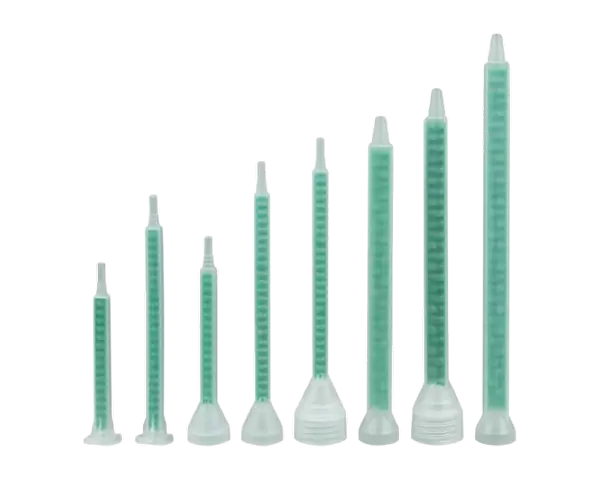
The MB static mixer mixes materials very well. It has a spinning bayonet shape that locks tightly. This stops glue from leaking. Inside the tube, there are spiral shapes. These help materials move smoothly. You always get a good mix. MB static mixers come in many sizes. You can pick the one you need. The mixing parts are set at a 90° angle. This helps mixing in all directions. You get a strong seal and smart material flow.
Tip: The MB static mixer fits new 50ML rubber cylinders. It gives a great seal.
Design Element
Contribution to Performance
Mixing Element Arrangement
90° angle helps mixing everywhere and keeps things even.
Materials Used
Strong materials make the mixer work better and last longer.
Specific Configurations
Special designs help mixing and lower pressure problems.
MS Static Mixer Features
The MS static mixer is good for tough jobs. It has a yellow round opening. This fits many glue machines. Inside, there are nodes that mix two materials well. You can choose from different sizes and shapes. The MS static mixer works with glue, resin, and more. You get steady results and better work speed.
Note: The MS static mixer is easy to use and gives steady mixing.
Commonalities
Both mixers help you mix materials well. You can use either for two-part mixing. Each mixer has many models to fit your needs. Both MB and MS mixers are strong and work reliably. You get good results and can use them with glue machines.
Both mixers are made for factories.
You can pick the best model for your job.
Each mixer makes sure materials mix evenly.
Design and Construction
Internal Structure
The inside parts of MB and MS static mixers help mix things well. MB static mixers have spiral shapes set at a 90° angle. These spirals make the materials swirl and mix evenly. MS static mixers have nodes inside the tube. The nodes break up the flow and blend two parts together. Mixing happens in three steps: macromixing, mesomixing, and micromixing. Macromixing spreads materials through the tube. Mesomixing makes the flow more active and mixes new feed with the rest. Micromixing breaks up clumps and makes the mixture smooth. The inside design helps the flow and makes mixing work better.
Materials and Build
You want a mixer that lasts and can handle strong chemicals. MB and MS static mixers use tough materials to stay strong and work with many chemicals. The table below shows the main materials and their benefits:
Material
Properties
Impact on Durability and Compatibility
Polypropylene (PP)
Excellent chemical resistance and durability
Long-lasting performance in industrial applications
Polyoxymethylene (POM)
High strength and dimensional stability
Precise adhesive dispensing and prevents degradation
These materials help the mixer stay strong and not get damaged by chemicals. You can count on the mixer for hard jobs.
Connection and Sealing
You need to install the mixer right for it to work best. MB static mixers use a spinning bayonet design for a tight fit. This stops glue from leaking and keeps the seal strong. MS static mixers have a yellow round mouth that fits glue machines. For both types, follow these steps:
Put the mixer in the right spot to mix well.
Line up pipes so the flow is even.
Attach the mixer tightly so it does not move.
Pick the best gasket to stop leaks and keep it safe.
Tip: A tight seal and good alignment help mixing and lower maintenance.
Applications and Performance
Typical Uses
MB and MS static mixers are used in many places. These mixers help mix two parts together fast and evenly. You can find them in glue mixing tubes and epoxy mixing tubes. Machines that mix things by themselves use these mixers to combine materials well. Chemical processing mixers and plastic processing mixers also use these tools. You get good results when you pick the right mixer for your job.
Glue Mixing Tube
Automated Mixing Equipment
Chemical Processing Mixer
Plastic Processing Mixer
Epoxy Mixing Tube
Note: You can pick a mixer model that works for your needs. Contriu has many sizes and shapes for different jobs.
Mixing Efficiency
You want your materials to mix well every time. MB static mixers have spiral shapes set at a 90° angle. This shape makes the materials spin and mix evenly. MS static mixers have nodes inside the tube. These nodes break up the flow and mix two parts together. Both types give you the same good mixing quality. The design stops clumps and keeps the color even. You can count on these mixers to work well every time.
Mixer Type
Mixing Element
Mixing Quality
Application
MB
Spiral
High
Glue, Epoxy
MS
Node
High
Resin, Adhesive
Pressure and Flow
You need to control pressure and flow for things to work right. MB static mixers have a spinning bayonet design. This design gives a tight seal and stops leaks. MS static mixers have a round mouth that fits glue machines. Both types give you steady flow and low pressure drop. The mixer design helps materials move through the tube without getting stuck. You can mix thick materials easily and keep your work going smoothly.
Tip: You can make mixing better by picking the right mixer for your material and flow.
Difference Between MB and MS
Key Differences Table
You want to know how MB and MS are not the same. The table below shows what makes each mixer special. You can look at their shape, how well they mix, what jobs they fit, and what machines they work with. This helps you pick the best mixer for your work.
Feature
MB Static Mixer
MS Static Mixer
Geometry
Spiral elements at 90° angles, rotating bayonet lock
Series of nodes, yellow round mouth
Mixing Efficiency
Even mixing with spiral flow
Consistent blending with node design
Application Suitability
Best for glue, epoxy, and 50ML rubber cylinders
Ideal for adhesives, resins, and wide glue machines
Compatibility
Fits new 50ML rubber cylinders, secure connection
Fits many glue machines, industry-standard opening
Sealing
Strong seal, prevents glue leakage
Reliable fit, steady output
Model Variety
Multiple lengths and capacities
Multiple lengths, calibers, and capacities
You can use this table to quickly see how MB and MS are different.
Pros and Cons
You need to know what makes these mixers different. The list below shows how MB and MS are not the same. This helps you choose the right one.
MB static mixer has a spiral and bayonet shape. It gives a tight seal and mixes things evenly.
MS static mixer has nodes and a yellow round mouth. It blends well and fits many machines easily.
MB static mixer works best with new 50ML rubber cylinders. It connects well and stops leaks.
MS static mixer fits lots of glue machines. You can use it for many jobs.
MB static mixer comes in many sizes and holds different amounts. You can use it for small or big projects.
MS static mixer has many models with different sizes and shapes. You can pick the one that fits your work.
The difference between MB and MS changes how you mix, what machine you use, and how easy it is to get good results.
Remember, knowing the difference between MB and MS helps you pick the best mixer for your material and machine.
Choosing the Right Static Mixer
Application Requirements
You need to think about your job before you pick a static mixer. Start by looking at the type of materials you want to mix. Some materials are thick, while others are thin. You should also check if you need to mix glue, resin, or another two-part material. The MB static mixer works well with new 50ML rubber cylinders and gives a strong seal. The MS static mixer fits many glue machines and handles adhesives and resins. You should match the mixer to your machine and the material you use. This helps you get the best mixing quality for your project.
Tip: Always check the size and type of your glue machine before you choose a mixer.
Model Selection Tips
You can find many models for both MB and MS static mixers. Look at the length, caliber, and capacity of each model. If you have a small job, pick a mixer with a lower capacity. For bigger jobs, choose a model with a higher capacity. The MB static mixer comes in different lengths and sizes, so you can pick what fits your needs. The MS static mixer also offers many options, with lengths from 149.0 mm to 379.0 mm and calibers from 1.5 mm to 3.987 mm. Use the product codes to find the right model for your work.
Mixer Type
Length Range (mm)
Caliber Range (mm)
Capacity Range (CC)
MB
Various
Various
0.19 - 1.91
MS
149.0 - 379.0
1.5 - 3.987
2.3 - 34.5
Cost and Maintenance
You want a mixer that saves you money and time. Both MB and MS static mixers come in boxes of 500 pieces, which is good for large or small projects. You do not need to clean these mixers after use. You can use a new one each time, which keeps your work area clean and safe. This also helps you avoid mixing errors. You should store the mixers in a dry place to keep them in good shape. If you use the right mixer for your job, you will spend less on repairs and get better results.
Static vs Dynamic Mixers
When to Use Dynamic Mixers
You might ask when dynamic mixers are the best pick. Dynamic mixers are good when you need fast and tricky mixing. Factories that make medicine and food use dynamic mixers a lot. These mixers blend things quickly and very well. Dynamic mixers have motors and need power to work. The motors make the mixing wild and random. This helps mix things faster and makes the mix better. You should use dynamic mixers if you need really good mixing or if your materials are hard to mix. Dynamic mixers work best for tough mixing jobs.
Tip: Pick dynamic mixers when you need fast and exact mixing.
Static Mixer Advantages
Static mixers have many good points that make them a smart pick. You do not need motors or wires to use a static mixer. The flow of your material pushes it through the mixer. This makes static mixers easy and cheap to use. Static mixers do not have moving parts, so you do not need to fix them much. You can put a static mixer in your pipes without trouble. You do not need extra machines or power. Static mixers use the push from pumps to mix things. This saves energy and keeps the mixing steady.
Static mixers need almost no fixing.
You can set up static mixers without wires or motors.
Static mixers can handle changes in flow and still mix well.
Feature
Static Mixers
Dynamic Mixers
Energy Source
Process flow energy
Requires motors and power supply
Maintenance
Near-zero maintenance, no moving parts
Requires maintenance of motors and moving parts
Mixing Quality
Suitable for simple mixing tasks
High mixing quality for complex materials
Pressure Drop
Minor, predictable pressure drop
Reduced pressure loss due to efficient design
Application
Ideal for remote or hazardous locations
Preferred for high-performance mixing applications
Note: Use static mixers for easy mixing jobs and dynamic mixers for hard ones.
You now understand the main ways MB and MS static mixers are different. MB has a spiral shape and a bayonet lock. This gives a strong seal. MS has nodes inside and a yellow round mouth. This helps it fit many machines. You should always pick the mixer that matches your material and machine. This helps you get the best results. Use this table to help you choose the right Contriu mixer for your job:
Feature/Consideration
Description
Hygienic Design and Compliance with GMP
Stops germs from getting in and is simple to clean
No Moving Parts or Seals
Makes less dirt and does not wear out fast
CIP/SIP Compatibility
Lets you clean and sterilize the mixer easily
Fully Sealed System
Keeps your product safe from outside things
Gentle Mixing for Sensitive Formulations
Keeps soft materials safe
Experts say static mixers are easy to put in, last a long time, and work for many jobs. You can always ask Contriu or a pro for help with your next project.
FAQ
What materials can MB and MS static mixers handle?
You can use MB and MS static mixers with two-component materials like adhesives, resins, and glues. Both mixers work well in industrial settings and fit many glue machines.
How do I choose the right mixer model for my application?
Check your material type and machine compatibility. MB mixers fit new 50ML rubber cylinders. MS mixers have a yellow round mouth and fit industry-standard glue machines. Pick the length and capacity that match your needs.
Are MB and MS static mixers easy to install?
You can install both mixers easily. MB mixers use a rotating bayonet lock for a secure fit. MS mixers have a round mouth that connects quickly to glue machines. You get a strong seal and steady mixing.
Can I use MB and MS static mixers for automated mixing equipment?
Yes, you can use both MB and MS static mixers in automated mixing equipment. They help you mix two-part materials evenly and improve production efficiency.
Do MB and MS static mixers require cleaning after use?
You do not need to clean MB or MS static mixers. You can use a new mixer for each job. This keeps your workspace clean and prevents mixing errors.