Home > News > Blog > Sapphire Blades vs Steel Blades for FUE Hair Transplants Which Is Best
share
Sapphire Blades vs Steel Blades for FUE Hair Transplants Which Is Best
Aug 05Source:Intelligent Browse: 68
You need clear facts for FUE hair transplants. Sapphire blades offer better incision precision. They give higher graft density. They cause lower scalp trauma. They also allow faster post-operative recovery. Steel blades do not perform as well. However, surgeon skill determines your final cosmetic success.
Blade choice affects recipient site channel creation. This step is during follicular unit extraction. This critical stage sets hair direction. It also sets hair angle and density.
Special tools help doctors make clean channels. The sapphire hair implant blade is one example. It helps create a natural appearance. Our guide compares sapphire FUE to steel tools. We look at key clinical metrics. You will look at blade hardness first. Then you check incision accuracy and bleeding levels. You also check healing speeds and procedure costs. Do this before booking your transplant.
Key Takeaways
Sapphire blades cut sharper and smaller than steel. This helps protect your scalp tissue.
Smaller sapphire cuts reduce post-surgery bleeding, swelling, and scabbing. Patients enjoy a much faster recovery period of five days.
Neat sapphire cuts help doctors place many grafts. They fit fifty grafts in each spot. This creates much fuller hair.
Steel blades cost less money at first. They help people on a budget. These classic metal tools still work well. They give you great hair again.
A doctor's skill decides your final look. Skilled hands direct the tools well. This helps your hair grow naturally.
Understanding Channel Creation in FUE
Recipient channel creation is a key FUE step. It sets the base shape for all hair follicles. Your surgeon controls depth, tilt, line, and space. Your final look depends on this important phase. You cannot fix technical mistakes later during graft placement.
Surgeons use special blades to make tiny channels. Good cuts allow smooth graft placement without skin damage. Your doctor makes tiny openings during follicular unit extraction. Each small cut creates the base for your results.
The Surgical Role of Recipient Site Incisions
Your surgeon matches your natural growth pattern now. Hair direction relies on the angle of each cut. Surgeons use sharp angles to match native hair lines.
Incision Factor
Impact on Follicle Direction & Growth
Clinical Considerations
Incision Angle
Controls the exit angle and direction of new hair.
Must be angled to copy original native hair patterns.
Incision Depth
Helps proper graft seating and successful growth.
Blade length should match the longest follicle.
Matching these factors prevents issues like skin bumps. Proper depth ensures roots get good blood flow.
How Blade Material Affects Follicle Survival
Blade material affects blood vessel damage and tissue squeeze. Sharp sapphire tools make smooth cuts without skin tearing. Clean cuts help keep healthy tissue around each unit.
Smooth tiny cuts create great conditions for hair roots. Less damage leads to higher graft survival rates later. Better blade materials help secure fue hair transplant success.
Sapphire Blades in Modern Hair Restoration
Material Superiority: Mohs Hardness and Sharpness
Fake gems offer great strength for hair work. This material scores 9 on Mohs scale. Regular steel only hits 5 to 6.5. Hard edges do not dull during long jobs. Doctors make same cuts from start to end.
High material quality gives extra sharp blade edges. Pure sapphire cuts tiny paths without shaking at all. Non-metal gems do not cause allergic skin reactions. Doctors cut delicate skin safely without pulling any tissue.
Advantages of the Sapphire Hair Implant Blade
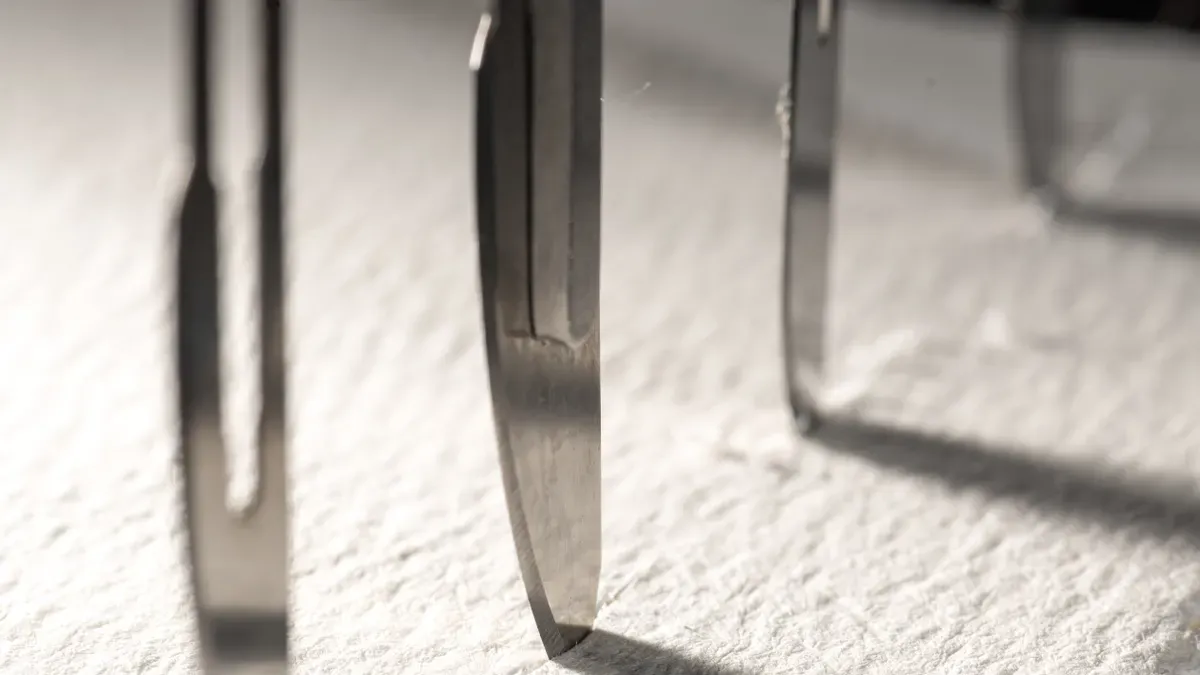
The Contriu sapphire hair implant blade works very well. This special sapphire tool uses two sharp edges. It gives doctors full depth control and easy angles. You get natural looks from this smart blade shape.
Doctors like these sapphire tools for hard work. These sharp blades match well with modern tools. They work fine with Choi pens and small tweezers. These clean tools speed up work and protect skin.
Precision Channel Opening and Natural Density
Sapphire hair tools make clean V-shaped tiny cuts. These special blades stay 0.8 to 1.2 mm wide. Smooth cuts stop tearing and keep skin very healthy. Your scalp sees way less damage during channel work.
Small cuts allow 50 to 60 grafts per area. You get thick hair without blocking key blood flow. Sharp tips stop cuts from joining together too close. Pick sapphire tools for natural growth and fast healing.
Traditional Steel Blades in FUE Surgery
The Legacy of Surgical Steel Instruments
Doctors know steel tools work very well. Many clinics use these old tools daily. Metal blades cut skin with high safety. The sharp edge lasts a long time.
You get many choices with basic tools. Metal blades come in many different sizes. Surgeons pick sizes to match your hair. Steel works great for sensitive skin types. Skilled doctors control bleeding with smart care.
Limitations in Sharpness and Tissue Trauma
Steel tools work fine for standard jobs. Yet metal dulls faster than gem blades. A dull tool needs more hand force. Extra force pulls on your soft scalp.
Small rubs make cuts slightly too big. Larger cuts cause more local skin swelling. You may keep scabs for longer times. Steel tools lack ultra-fine modern edges.
Cost Factors and Widespread Availability
Basic metal tools reduce total surgery costs. Standard FUE cuts prices by twenty percent. Clinics offer metal options almost everywhere today. Low tool costs keep prices very fair.
Country
Standard FUE Price Range
Sapphire FUE Price Range
USA
$4,500 – $10,000
$5,000 – $12,000
UK
£3,500 – £8,000
£4,000 – £9,000
Turkey
$1,200 – $3,000
$1,500 – $3,500
Selecting traditional steel saves you real cash. Metal options offer a good budget path.
Clinical Comparison: Sapphire FUE vs Steel FUE
Direct evaluations show clear tool differences. Blade material changes every single incision site. Good tools give better surgical control. Fine items cause less scalp disruption. You must check blade performance carefully.
Incision Precision and Scalp Disruption
Sapphire blades make clean tiny channels. Sharp edges make smaller openings. Steel blades make wider openings instead. Smooth gem surfaces stop skin tearing. Less friction protects nearby hair roots. Sharp tools save delicate scalp vessels.
Feature / Material
Steel Incisions
Sapphire Incisions
Entry Point Geometry
Creates wider and rounded entry points
Generates narrower, sharper entry points
Precision & Control
Less control over graft density spacing
Allows tighter spacing and better directional alignment
A study by Chen et al. shows key test results.
Sapphire tools harmed only 1.8% of hair.
Microneedles harmed about 3.2% of hair.
Steel tools harmed 5.6% of hair.
Less damage helps a graft survival rate stay high. Low harm keeps roots very healthy. Intact skin walls feed new hair well.
Healing Timeline, Bleeding, and Scabbing
Smaller cuts speed up your recovery time. Sharp tools cut skin without dragging. Your body bleeds very little now. Less fluid means less head swelling. Clean cuts keep skin walls strong. Less swelling helps you heal fast.
Small cuts mean smaller post-surgery scabs. Tiny scabs wash away much faster. Sapphire FUE patients heal very quickly. Less swelling helps you sleep well. You return to normal life fast. Quick healing makes patients very happy.
Graft Packing Density and Cosmetic Results
Precise cuts offer strong density benefits. Doctors place cuts close together safely. Small channels allow tight hair placement. You get a natural look easily. Sharp gems guide natural hair paths. Precise gaps keep old roots steady. High density fixes your original hairline. Equal cut depth keeps skin level.
Tests show both tools keep hair well. Both methods keep 90% to 95% of grafts. Long-term hair survival stays very close. Final success depends on doctor skill. A skilled doctor uses sapphire fue for volume. Comparing materials helps you plan well. Careful care keeps patient satisfaction high.
Choosing the Best Option for Your Transplant
Patient Factors: Hair Texture and Scalp Needs
Your scalp needs guide your hair loss treatment choice. Doctors use sharp sapphire blades for thin hair cuts. These tools lower skin hurt. You recover much faster. They prevent big raised scars.
For tight curls, doctors change their tools quickly. They use smart tools or mix different surgical steps. Doctors match smart tools to your scalp type. This gives you great results.
Balancing Surgical Cost with Long-Term Results
Paying for a sapphire blade brings high value later. Clean cuts help place hair at good angles. Deep hair spots heal well. Smart methods lower skin harm. You speed up full body recovery.
Clinical Indicator
Sapphire FUE
Traditional FUE
Graft Density
Up to 50 grafts/cm² (50% higher)
30–35 grafts/cm²
Graft Survival Rate
95%–98%
90%–95%
Healing Duration
5–7 days
7–10 days
Pricing Tier
Premium Pricing
Standard Pricing
Choosing sapphire fue builds high hair density over time. People pick sapphire fue for better hair coverage. You heal fast compared to standard methods. High survival rates fix severe thinning well.
Why Surgeon Expertise Remains Paramount
Your doctor's skill decides your final success rate. Smart tools cannot check hair quality at all. They fail at picking angles. Skilled hands guide your fue process carefully. Good care protects soft skin.
Bulge Region Preservation: Shallow cuts save vital stem cells. Saved cells protect hair roots.
Learning this soft skill takes years of work. Smart doctors blend fine speed with high care. They protect your fue hair transplant roots well. Tools help out. Yet human eyes build proper scalp density.
Sapphire blades are very hard. They have two sharp edges. These tools make clean cuts. They hurt your scalp less. You get more hair density. Steel blades cost less money. Yet sapphire FUE cuts much smoother. It also stops heavy bleeding.
Tools like the Contriu blade work well. A good doctor uses them best. Skilled hands give great hair results. Talk to a doctor today. Get a personal hair plan. Check your scalp and budget first. Then pick sapphire FUE.
FAQ
How do sapphire blades improve your surgical recovery?
Sapphire blades make clean cuts. They use very sharp edges. You get less scalp damage. You also have less bleeding. Fue hair transplants cause little harm. Head swelling stays very low. Your scalp skin heals fast. Healing takes five to seven days.
Why do doctors prefer sapphire fue for high density?
Doctors choose sapphire fue for clear cuts. They make sharp V-shaped openings. The cuts stay close together. Doctors place 50 grafts per centimeter. You get very thick hair. Your old hair stays safe.
What makes the Contriu sapphire hair implant blade unique?
The Contriu sapphire blade uses real gems. These sharp blades have two edges. Doctors control cut depth easily. They open hair channels safely. This special tool helps grafts live. It fits into modern fue workflows.
Are premium sapphire procedures worth the investment?
Yes, sapphire fue gives great long-term results. Hard gem blades stay sharp throughout. They do not dull during surgery. Precise cuts save soft skin. You get a natural look forever.