Modern manufacturing increasingly depends on controlled adhesive dispensing. From electronics assembly and automotive components to optical devices and industrial bonding, manufacturers need to apply adhesives in very small and consistent quantities. A slight difference in adhesive volume, position, or flow can affect bonding strength, appearance, electrical performance, or final product reliability.
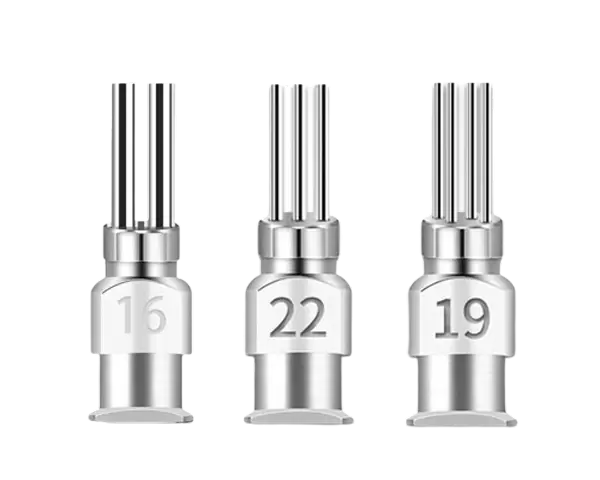
This is why the dispensing needle has become an important part of automated adhesive application. A well-designed One-piece Double-threaded Precision Needle can improve the connection between the dispensing equipment and the adhesive flow path while supporting more stable and repeatable dispensing.
Why Precision Dispensing Is Becoming More Important
As products become smaller and production lines become faster, adhesive application is becoming more demanding.
Traditional manual dispensing can create differences in bead size and position because of variations in pressure, operator technique, and material viscosity. Automated dispensing equipment solves many of these problems, but the dispensing needle itself still plays a critical role.
The needle determines how adhesive enters and exits the dispensing path. Its internal diameter, tip geometry, surface condition, thread connection, and alignment can all influence the final result.
For high-volume production, even a small inconsistency can become significant when repeated thousands of times.
What Makes a One-piece Double-threaded Precision Needle Different?
A conventional dispensing assembly may use several separate components to connect the syringe, adapter, needle holder, and dispensing tip. Every additional connection introduces another interface that needs to remain properly aligned and sealed.
An integrated one-piece dispensing needle takes a different approach by combining the needle structure into one component.
The double-thread configuration provides a secure threaded connection while supporting stable installation. For automated equipment, maintaining a consistent connection is important because repeated movement, pneumatic pressure, and vibration can gradually expose weaknesses in poorly matched components.
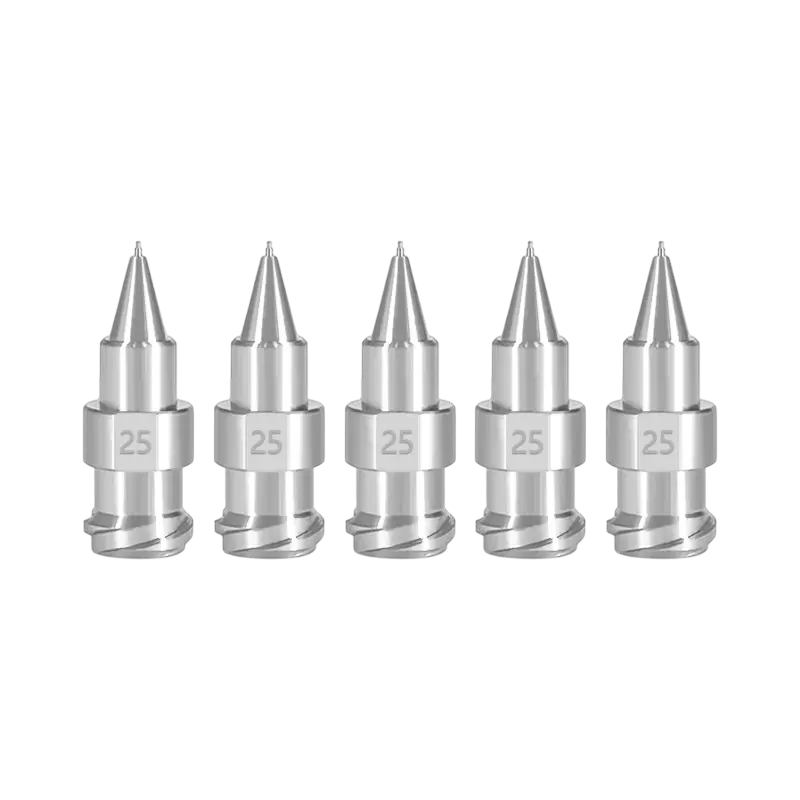
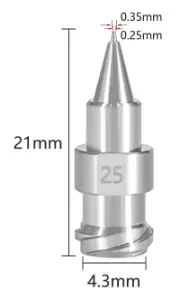
Contriu's product range includes a One-piece Double-Thread Precision Needle, described on its website as a one-piece, double-threaded Musashi-style precision stainless steel needle for industrial dispensing applications.
Stainless Steel and Precision Machining
Material selection is another important consideration.
Adhesives can vary greatly in viscosity and chemical composition. Some materials may contain fillers, solvents, reactive components, or abrasive particles. The dispensing needle therefore needs to maintain its dimensional stability and internal surface quality during repeated operation.
Stainless steel is commonly used for precision dispensing needles because it offers a useful combination of mechanical strength, corrosion resistance, and dimensional stability.
However, using stainless steel alone does not guarantee precision. Manufacturing accuracy also matters.
The internal passage needs to remain consistent, while the threaded sections must be produced accurately enough to maintain proper alignment with the mating dispensing equipment. Surface quality is also important because adhesive residue can accumulate more easily on unsuitable or damaged internal surfaces.
The Connection Between Needle Design and Dispensing Quality
In automated adhesive dispensing, several problems can be related to the dispensing tip or connection interface.
For example, poor alignment may cause the adhesive bead to shift from the intended position. An unsuitable internal passage may increase flow resistance. A weak connection can introduce leakage or movement during repeated dispensing cycles.
These problems can become particularly noticeable when manufacturers work with small adhesive volumes.
A precision dispensing needle for automated equipment therefore needs to provide a stable and repeatable fluid path. The objective is not simply to allow adhesive to pass through the needle, but to help the dispensing system maintain predictable material delivery.
Applications Across Modern Manufacturing
The demand for precision dispensing components is closely connected to the growth of automated manufacturing.
Electronics Assembly
Electronics manufacturers often apply small amounts of adhesive for component fixation, protection, sealing, and assembly. In these applications, excessive adhesive can contaminate nearby components, while insufficient adhesive may weaken the assembly.
A precision adhesive dispensing needle can help manufacturers maintain more consistent application patterns.
Automotive Electronics
Modern vehicles contain increasing numbers of sensors, control modules, and electronic components. Adhesives may be used for bonding, sealing, and component protection.
Automated dispensing requires repeatable positioning because production volumes are high and component tolerances can be tight.
Optical and Precision Devices
Optical assemblies can be particularly sensitive to excess adhesive. An uncontrolled bead may interfere with optical surfaces or alter component alignment.
For these applications, dispensing equipment must provide controlled flow and accurate placement.
Industrial Assembly
Industrial manufacturers use adhesives for bonding metal, plastic, glass, and composite components. Depending on the adhesive, dispensing needles may need to handle different viscosity levels and production speeds.
This makes compatibility between the adhesive, dispensing equipment, and needle an important part of process development.
Choosing the Right Precision Dispensing Needle
When selecting a one-piece double-threaded precision needle, buyers should not focus on the needle alone. The complete dispensing process should be considered.
Important factors include:
● Adhesive viscosity and formulation
● Required dispensing volume
● Desired bead or dot size
● Needle inner and outer dimensions
● Thread specification
● Equipment compatibility
● Operating pressure
● Dispensing speed
● Required chemical and corrosion resistance
● Cleaning and replacement requirements
For high-volume automated production, consistency between batches is also important. A needle that performs well during initial testing but varies significantly between production lots can create problems once it is introduced into a large-scale manufacturing process.
Why Integrated Designs Can Support Production Stability
The main value of an integrated dispensing needle is not simply its appearance. Its value comes from reducing unnecessary interfaces and maintaining a predictable dispensing structure.
When a dispensing system operates repeatedly at high speed, small mechanical variations can influence adhesive placement. A stable threaded connection and accurately manufactured fluid path can therefore contribute to more consistent production.
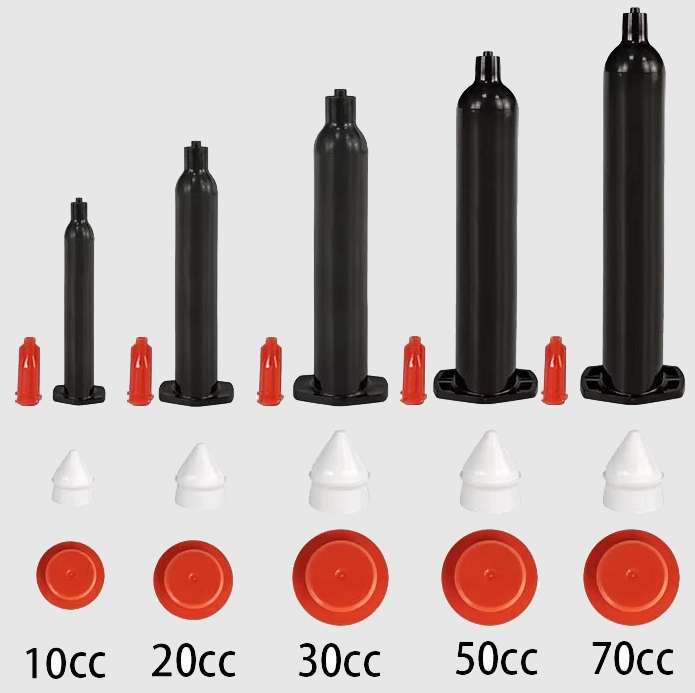
Contriu focuses on industrial dispensing components including metal glue needles, plastic glue needles, dispensing fittings, syringe cylinders, and static mixers. This broader product range is relevant because dispensing performance normally depends on the interaction between the needle, barrel, fitting, adhesive, and dispensing equipment rather than on one component alone.
Final Thoughts
As automated manufacturing becomes faster and more precise, dispensing components are becoming increasingly important to overall process control.
A One-piece Double-threaded Precision Needle can provide a stable connection and controlled adhesive path for applications where repeatability matters. Stainless steel construction, accurate machining, appropriate thread design, and compatibility with the dispensing system all contribute to reliable performance.
For manufacturers working with automated adhesive dispensing, the right needle should therefore be selected as part of the complete process rather than as an inexpensive accessory.
With its industrial dispensing product range and precision needle solutions, Contriu provides components designed to support more controlled and repeatable adhesive application across electronics, automotive, optical, and general industrial manufacturing.