A Syringe Needle may look like a small component, but its gauge, length, material, tip geometry, and connection design can directly affect injection performance. For medical distributors, clinics, and healthcare product manufacturers, choosing the right needle is therefore more than simply selecting a standard size.
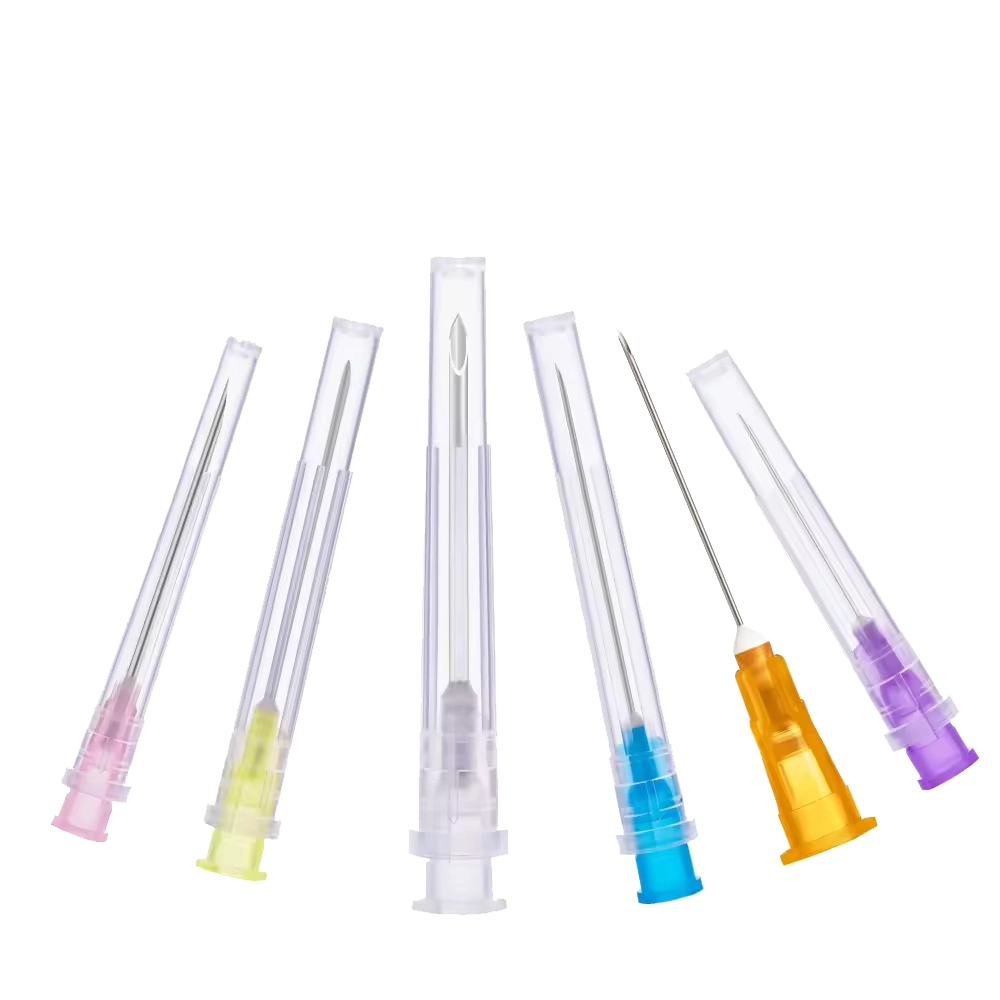
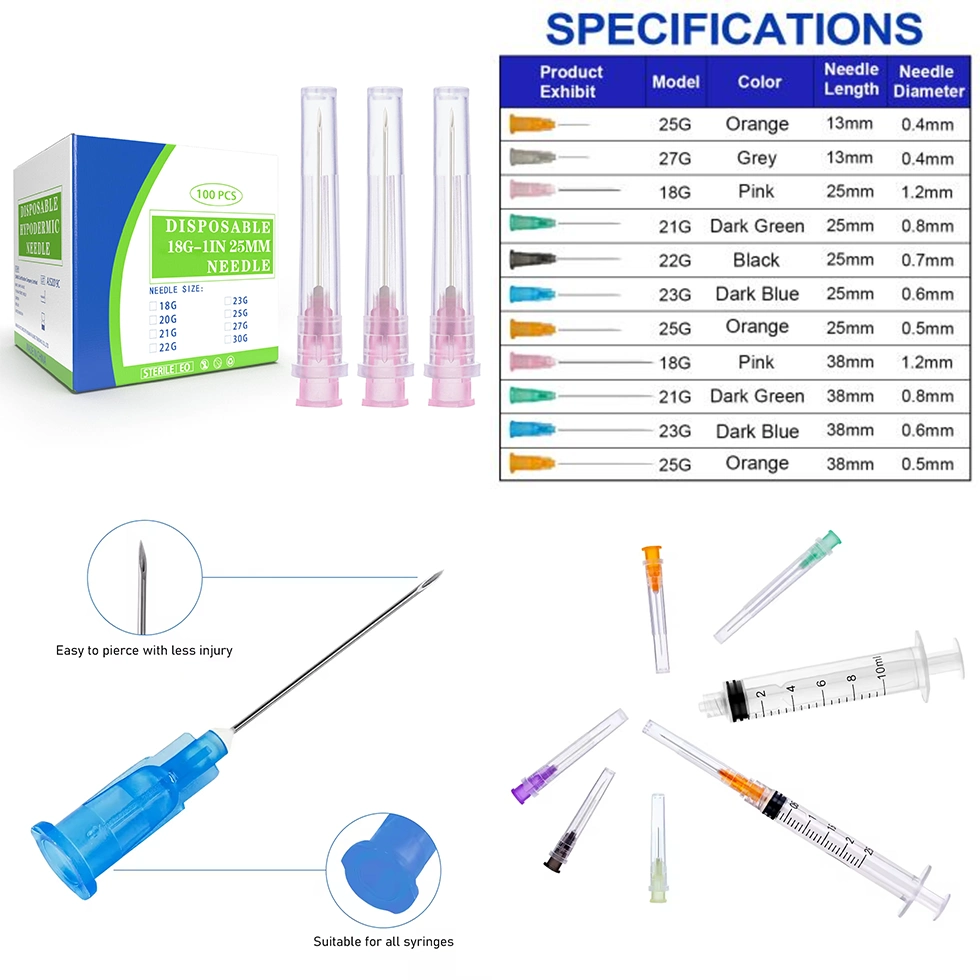
Contriu provides stainless steel sterile disposable hypodermic syringe needles in 16G–34G, with common needle lengths of 13 mm, 25 mm, and 38 mm. OEM/ODM customization is also available for specific product requirements.
Gauge Selection: Balance Flow and Injection Requirements
Gauge is one of the first specifications buyers should consider. A larger gauge number generally indicates a smaller needle outside diameter, while a lower gauge number indicates a larger diameter.
The correct gauge depends on the intended application and the properties of the fluid being delivered.
For example, thinner fluids may be compatible with finer needles, while more viscous fluids generally require a larger internal flow path to avoid excessive resistance. However, gauge selection should not be based on fluid viscosity alone. Injection route, required flow rate, pressure, device compatibility, and clinical requirements should also be considered.
Contriu's 16G to 34G syringe needle range provides multiple options for different application requirements.
Needle Length Is Equally Important
The correct syringe needle length depends on the intended injection method, equipment configuration, and required penetration depth.
Contriu offers standard lengths of:
● 13 mm / 0.5 inch
● 25 mm / 1 inch
● 38 mm / 1.5 inches
The appropriate length should be selected according to the intended use rather than simply choosing the longest or shortest option. A needle that is too short may not provide the required access, while an unnecessarily long needle can make handling more difficult.
For medical distributors purchasing in volume, offering several length options can also make the product range more adaptable to different end-user requirements.
Why Stainless Steel Matters
Material selection has a direct influence on needle performance.
Stainless steel is widely used for hypodermic needles because it provides the mechanical strength required for insertion while offering good corrosion resistance. For disposable medical applications, the cannula must also maintain consistent dimensions and a clean internal passage.
The manufacturing process is important here. Tube formation, cutting, grinding, beveling, cleaning, and inspection all contribute to the final needle quality.
A well-formed needle tip can reduce penetration resistance and support smoother handling, while consistent lumen dimensions help maintain predictable fluid delivery. Contriu's product line uses stainless steel construction and is designed as a sterile disposable syringe needle.
Connection Design Should Not Be Overlooked
The connection between the needle and syringe must provide secure attachment during use.
Contriu's listed syringe needle uses a bayonet-type connection, designed to provide a stable interface between the needle and syringe. For high-volume medical applications, a secure connection is important because the needle should remain properly positioned during operation.
When sourcing a syringe needle supplier, buyers should therefore confirm not only the gauge and length but also the connection type and compatibility with the intended syringe.
Sterile Packaging and Disposable Use
For medical injection products, sterility is a critical purchasing requirement.
Contriu's syringe needles are individually packaged and supplied as disposable sterile products. The product listing specifies 100 pieces per box, while its product information describes sterile packaging intended to maintain product integrity before use.
For distributors and healthcare suppliers, packaging consistency is particularly important because products may pass through transportation, warehousing, and multiple distribution stages before reaching the end user.
What Should Buyers Check Before Ordering?
A professional procurement process should confirm the following specifications:
| Specification | What to Check |
| Gauge | Match the required flow and application |
| Length | Select according to intended use |
| Material | Confirm stainless steel and material requirements |
| Tip | Check sharpness and geometry |
| Connection | Confirm syringe compatibility |
| Sterility | Verify sterilization and packaging requirements |
| Packaging | Confirm quantity and individual packaging |
| Customization | Check OEM/ODM requirements |
This information makes it easier to compare different sterile syringe needle manufacturers and avoid purchasing a product that meets the basic size requirement but does not fit the actual application.
Why Work With an Experienced Syringe Needle Manufacturer?
For large-volume buyers, consistency between batches can be just as important as the initial product specification. A suitable supplier should be able to provide stable dimensions, consistent needle quality, reliable packaging, and customization support when required.
Contriu has a dedicated medical division and manufactures medical and aesthetic needles as part of its medical product portfolio. The company also offers OEM/ODM services for its syringe needle products.
Conclusion
Choosing the right Syringe Needle requires a complete evaluation of gauge, length, material, tip design, connection, sterility, and packaging. Instead of selecting a needle based on size alone, buyers should match every specification to the intended application and syringe system.
With a range covering 16G–34G, multiple needle lengths, stainless steel construction, sterile individual packaging, and OEM/ODM options, Contriu provides a flexible product solution for medical distributors and healthcare product buyers.