In industries such as electronics assembly, medical device manufacturing, automotive bonding, and precision chemical dispensing, the margin for error is measured in microns and milliseconds. An inconsistent droplet, minor backflow, or thread instability can compromise entire production lines.
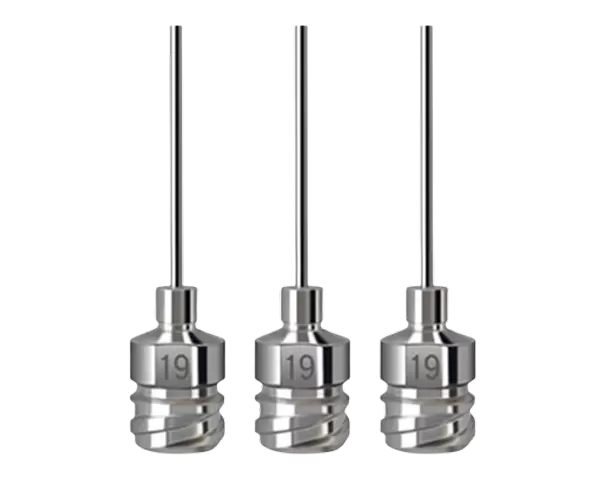
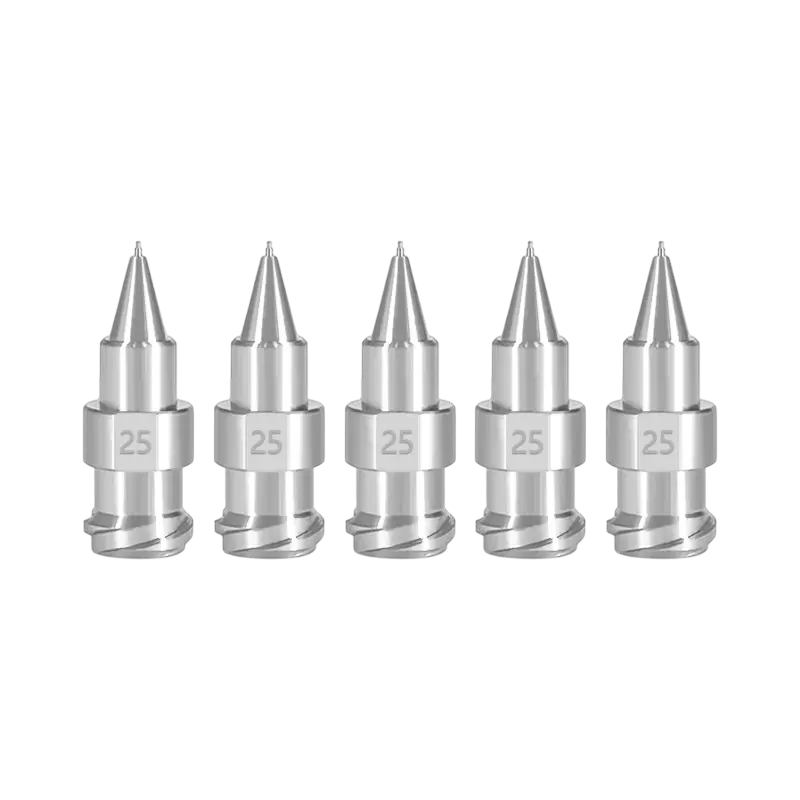
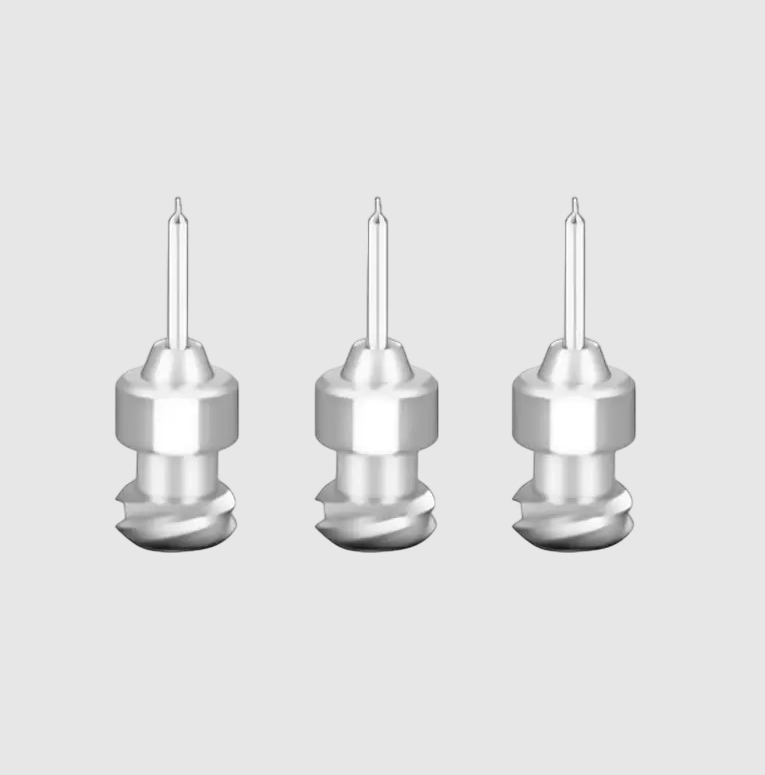
The Integrated double-threaded extended precision needle is not merely an accessory in dispensing systems—it is a critical control interface between fluid mechanics and application accuracy. Its engineering determines flow stability, wear resistance, and long-term dimensional reliability.
At Contriu, precision dispensing components are developed through rigorous mechanical design principles, focusing on thread integrity, material durability, and optimized flow geometry to deliver smooth, consistent dispensing across demanding industrial applications.
1. Structural Innovation: The Double-Threaded Advantage
Thread Stability and Mechanical Locking
Traditional single-thread dispensing needles may loosen under vibration or continuous pressure cycles. The double-threaded configuration enhances:
Axial retention force
Resistance to vibration-induced loosening
Improved sealing performance
Reduced risk of fluid leakage
The integrated double-thread design distributes mechanical load more evenly along the threaded interface, reducing localized stress concentration. This is particularly important in automated dispensing systems operating at high cycle frequencies.
Integrated Construction
The integrated structure eliminates weak junction points between the needle body and nozzle extension. By machining the extended needle as a unified component, structural rigidity is significantly enhanced.
This design minimizes:
Micro-deflection during pressure surges
Misalignment in robotic dispensing arms
Variations in droplet placement
For high-precision manufacturing environments, such stability translates directly into improved yield rates and reduced rework.
2. Extended Conical Precision Dispensing Nozzle: Flow Dynamics Optimized
Conical Geometry for Laminar Flow
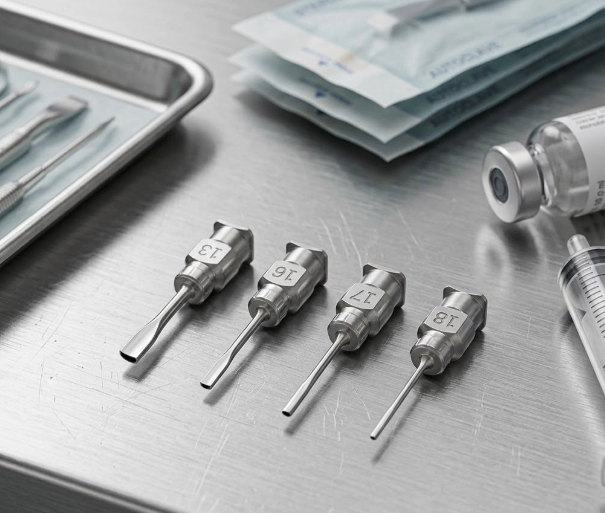
The extended conical precision dispensing nozzle is engineered to promote laminar flow characteristics. The gradual internal taper reduces turbulence and back pressure, ensuring:
The elongated conical design also improves reach into confined or recessed application areas, such as microelectronic substrates or deep cavity components.
Controlled Internal Surface Finish
Surface roughness within the internal bore directly impacts flow uniformity. Precision polishing techniques reduce micro-imperfections that could otherwise create flow disruptions.
At Contriu, internal finishing processes are calibrated to achieve optimal surface smoothness, preventing:
3. Material Science: Stainless Steel for Performance Longevity
Wear Resistance
Dispensing abrasive or chemically reactive materials can rapidly degrade inferior nozzle materials. The stainless steel construction of the Integrated double-threaded extended precision needle provides:
This is critical in applications involving solder paste, conductive adhesives, or particle-filled compounds.
Corrosion Resistance
In chemical dispensing environments, exposure to solvents, fluxes, or acidic materials can compromise surface integrity. High-grade stainless steel offers superior corrosion resistance, ensuring:
Dimensional stability over time
Consistent flow characteristics
Prevention of contamination
Structural Durability Under Pressure
Repeated pressurization cycles create fatigue stress. Stainless steel’s tensile strength and fatigue resistance allow the nozzle to maintain structural integrity under continuous operation, even in automated high-throughput production lines.
4. Precision Manufacturing: Micron-Level Control
High-performance dispensing needles require extremely tight dimensional tolerances.
Critical parameters include:
Internal bore diameter accuracy
Concentricity between threads and nozzle tip
Thread pitch precision
Axial alignment tolerance
Even minor eccentricity can affect droplet placement accuracy, especially in automated robotic systems.
Contriu employs advanced CNC machining centers and precision inspection systems to maintain micron-level consistency. Quality control includes:
These measures ensure that every integrated precision needle meets strict engineering standards.
5. Application Versatility Across Industries
The Integrated double-threaded extended precision needle is widely applicable in:
Electronics Manufacturing
PCB adhesive dispensing
Underfill material application
Solder paste deposition
Medical Device Production
Controlled bio-adhesive dispensing
Micro-volume reagent application
Automotive Industry
Sensor bonding
Sealant injection in confined assemblies
Industrial Automation
Precision lubrication
Micro-dosing chemical systems
The combination of extended reach, stable threading, and corrosion-resistant construction makes it suitable for both manual and fully automated dispensing platforms.
Conclusion: Engineering Confidence in Fluid Dispensing
The Integrated double-threaded extended precision needle represents a convergence of mechanical engineering, fluid dynamics optimization, and advanced material science.
From its integrated extended conical precision dispensing nozzle to its stainless steel wear-resistant construction, every structural element is engineered for durability, corrosion resistance, and consistent flow control.
Through precision manufacturing, thread stability optimization, and rigorous quality assurance, Contriu delivers dispensing solutions that support high-accuracy industrial applications where reliability is non-negotiable.
In precision manufacturing, consistency is not optional—it is engineered.