In modern industrial automation, motion is no longer a simple linear requirement—it is a complex interaction between speed, precision, durability, and reliability. As machines become faster and more compact, the management of dynamic cables, hoses, and pneumatic lines has become a critical engineering challenge. This is where Custom Cable Carrier solutions play a decisive role.
Understanding the Function of a Custom Cable Carrier
A cable carrier—also known as a drag chain or energy chain—is a mechanical guiding system designed to protect and organize cables and hoses in moving equipment. While standard models serve basic applications, complex machinery often requires custom cable carrier designs tailored to specific operating conditions.
A custom cable carrier is engineered according to:
Travel length and movement type
Cable diameter, quantity, and bending radius
Speed, acceleration, and load requirements
Environmental factors such as dust, heat, oil, or moisture
This level of customization ensures stable motion, minimizes cable wear, and reduces unplanned downtime.
Why Standard Cable Carriers Are Often Not Enough
As automation systems evolve, off-the-shelf cable carriers frequently fall short in real-world applications. Common limitations include:
Inadequate bending radius for sensitive cables
Insufficient load-bearing capacity
Poor resistance to harsh industrial environments
Limited compatibility with non-standard machine layouts
A Custom Cable Carrier addresses these issues by aligning mechanical design precisely with application requirements, rather than forcing the application to adapt to the component.
Key Engineering Advantages of Custom Cable Carrier Solutions
Optimized Cable Protection
Custom designs allow precise control of internal separation, ensuring that power cables, data cables, and fluid hoses are properly isolated. This reduces electromagnetic interference, abrasion, and premature failure.
Extended Service Life
By matching bending radius and chain geometry to actual motion parameters, custom cable carriers significantly extend cable and hose lifespan, lowering replacement frequency and maintenance costs.
Improved Machine Reliability
Stable and predictable cable movement reduces the risk of sudden cable breakage, which is often a root cause of unplanned equipment shutdowns.
Material Selection: Matching Performance with Environment
Professional Custom Cable Carrier manufacturers offer multiple material options, including:
High-strength reinforced plastic for lightweight, high-speed applications
Steel or stainless steel for heavy-duty loads and extreme environments
Hybrid designs combining strength and flexibility
Material choice directly impacts noise levels, wear resistance, chemical compatibility, and long-term performance. iHF Group provides technical consultation to ensure material selection aligns with operational demands.
Process Stability and Yield Improvement
One of the often-overlooked advantages of Plastic Sharpening Needles is their contribution to process stability. By minimizing volume fluctuation and preventing material climbing, these needles help:
Over time, this stability translates into measurable cost savings and reduced production variability.
Why Contriu Is a Trusted Supplier of Plastic Sharpening Needles
As a specialized manufacturer in precision dispensing components, Contriu focuses on delivering solutions that meet real-world production demands rather than theoretical specifications.
Key Strengths of Contriu
Precision-controlled manufacturing for consistent taper geometry
Reliable double-thread installation design
Stable quality across large production batches
Support for customized specifications and application requirements
By aligning product design with actual dispensing challenges, Contriu supports customers in achieving long-term process reliability.
Conclusion
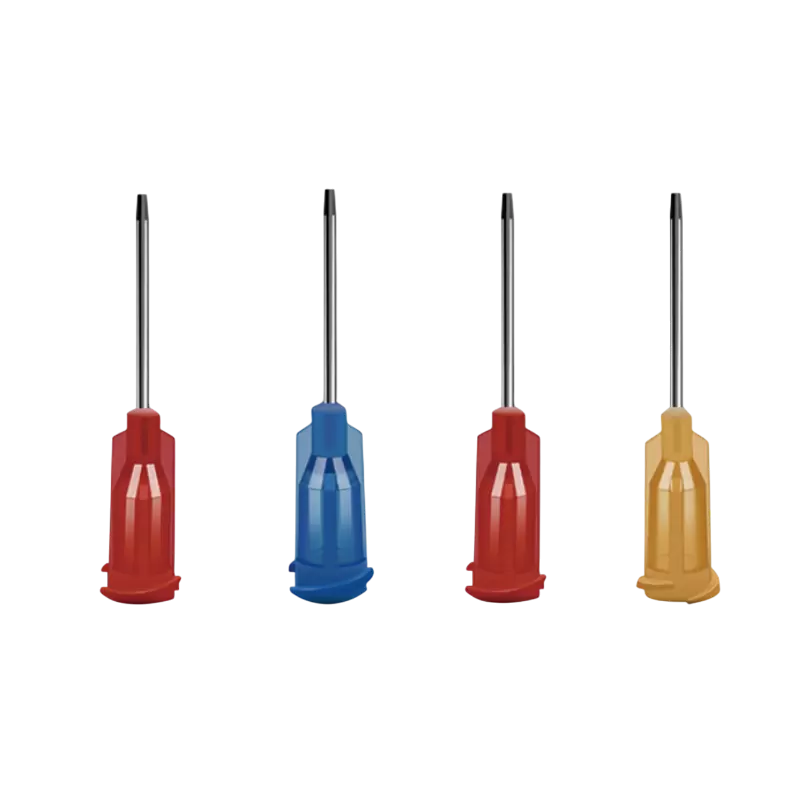
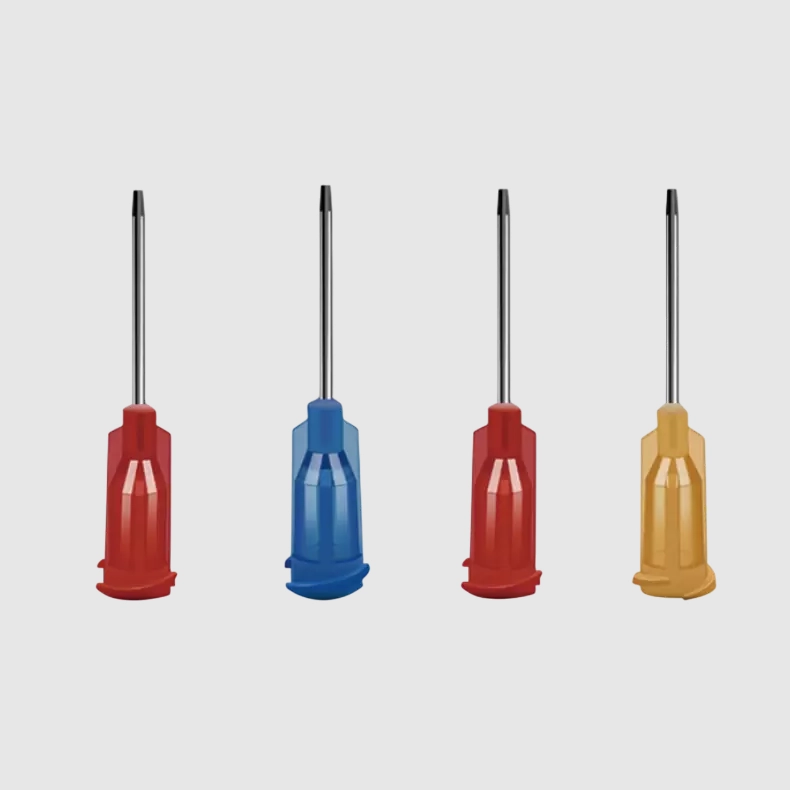
Although compact in size, the Plastic Sharpening Needle plays a critical role in modern precision dispensing systems. Its tapered front end, high-precision needle tip, and secure double-thread installation enable accurate micro-dispensing and stable production performance.
By partnering with a professional manufacturer such as Contriu, companies gain access to dispensing solutions that enhance accuracy, reliability, and overall manufacturing efficiency—proving that even the smallest components can deliver substantial value.