Home > News > Blog > What should buyers compare before ordering insulin syringes?
share
What should buyers compare before ordering insulin syringes?
Sep 24Source:Intelligent Browse: 1
Ordering insulin syringes takes careful thinking. You need safety, accuracy, and good value. Several features are important to check before buying.
You should compare needle gauge, needle length, syringe capacity, and unit markings. Brand fit is important too. Look at safety features and packaging. Price and the seller's reputation matter. Laws also affect what you can buy.
A sterile insulin syringe with needle works best when it matches your needs. Each factor affects your experience. This guide explains each detail. Then you can choose with confidence.
Comparing correctly prevents dosing errors. It reduces pain. It saves money. Good choices lead to better diabetes care.
Key Takeaways
Compare the needle gauge and length to lessen pain and make sure the dose is correct.
Pick a syringe size that fits your insulin dose so you measure it correctly.
Check for U-100 calibration and clear unit markings so you don't make mistakes.
Pick trusted brands and suppliers that have the right certifications, such as ISO 8537.
Check your state's laws and compare prices to buy safely and save money.
Needle Gauge and Length for Insulin Syringes
The needle gauge and length you pick change how comfortable you feel and how well you get the right dose. These two features work together. You should know about both before you order.
Why needle gauge affects comfort
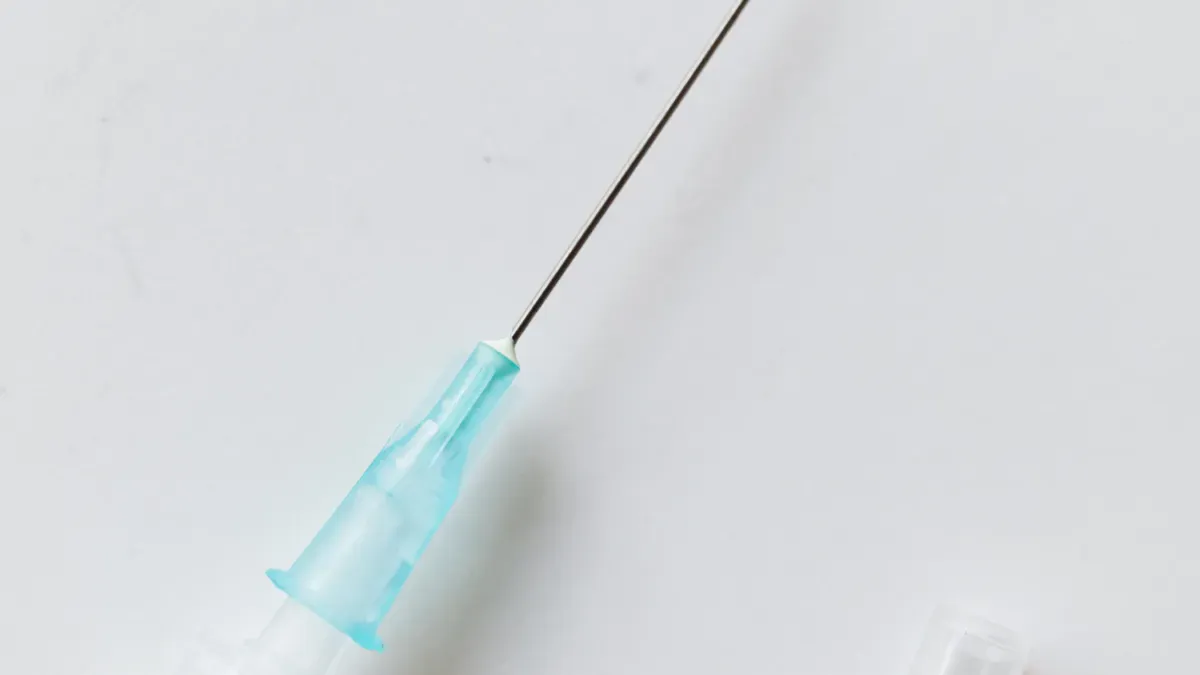
Needle gauge tells you how thick the needle is. A higher gauge number means a thinner needle. A thinner needle hurts less when you inject. It is good for people who are scared of needles or have very sensitive skin.
The table below shows common gauge options for insulin syringes with needles.
Needle Gauge
Thickness
Typical Use
31 gauge
Very thin
Best for kids, people afraid of needles, and those with sensitive skin
30 gauge
A bit thicker but still very thin
Often used for regular shots under the skin
29 gauge
Thicker
May be needed for some patients but can cause more discomfort
Thicker needles let insulin flow faster. But they can hurt more at the spot where you inject. For adults with normal to high BMI, doctors often suggest using 29–30 gauge. These are just general tips. Your doctor might tell you to use a different size based on what you need.
A 1ml insulin syringe works with many different needle gauges. So you can pick the needle that feels best for you. You get a clean, sterile syringe with needle choices for different people.
Choosing the right needle length
The length of the needle should fit where you inject and your body type. The layer of fat under the skin is different for kids and adults. Children have much thinner fat layers. Longer needles may hit the muscle in children, which can cause low blood sugar.
For adults, needle length depends on body size. Thin adults may do better with shorter needles (4–6 mm). People with more fat under the skin may need longer needles (6–12.7 mm). A 4-mm pen needle is thought to be the safest for adults. Even though some people think otherwise, 4-mm needles work for obese people with diabetes. They lower the chance of hitting muscle and make injections more comfortable.
Studies show that a person's BMI does not change how well a needle length works. Expert groups have said that shorter needles are best. But sometimes, a longer needle is needed. For some patients with high BMI and trouble moving well because of other health problems like arthritis, a longer pen needle might work better.
Research shows that 4-mm needles hurt less than 5-mm and 8-mm needles. The amount of insulin that leaked out was about the same for all lengths. One study found that a longer 12.7-mm needle stopped leaking and helped control blood sugar better (A1C went from 7.6% to 6.7%). This worked when shorter needles failed because the patient had trouble coordinating.
When you compare insulin syringes with needles, look at the details carefully. The right needle gauge and length make injections less painful and more accurate. Insulin syringes are available in 0.3ml, 0.5ml, and 1ml capacities for different dose sizes.
Syringe Capacity and U-100 Calibration
Picking the right syringe size and knowing how to read unit marks helps you get the right dose each time. You need to match the barrel size to the insulin amount your doctor prescribed. You also need to read the calibration marks the right way. Both steps stop dosing mistakes and keep your treatment safe.
Matching capacity to your insulin dose
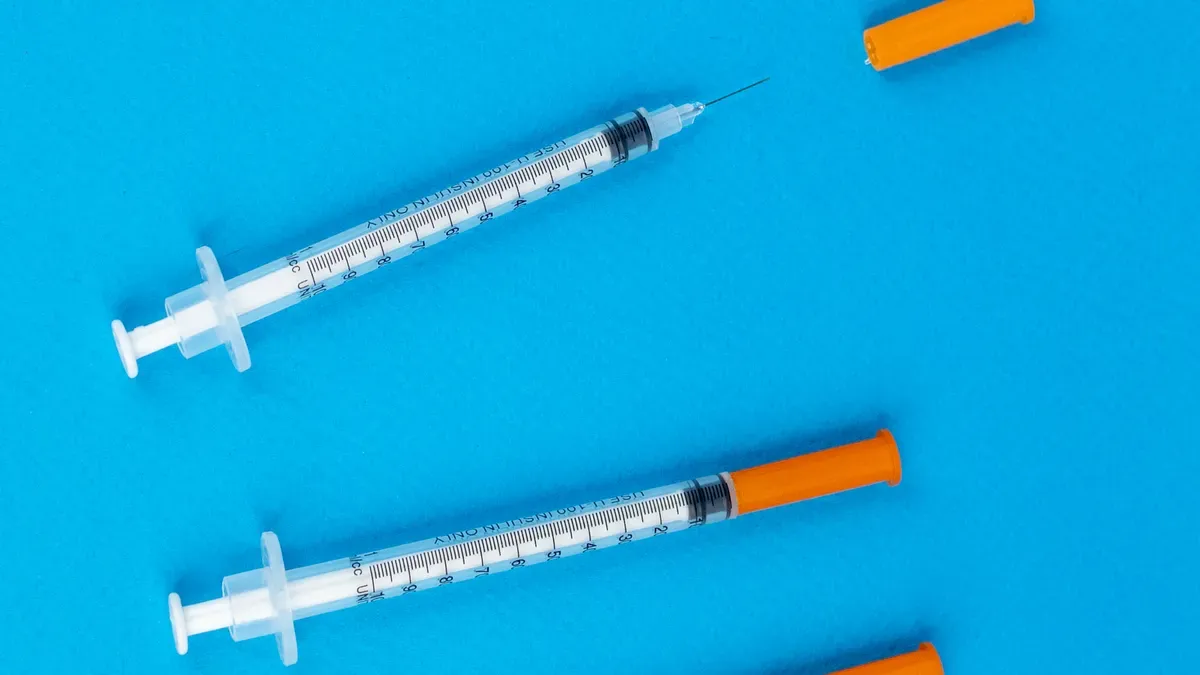
Insulin syringes come in three standard barrel sizes. You can pick a 0.3 ml, a 0.5 ml, or a 1.0 ml syringe. Each size holds a different max number of units. A 0.3 ml syringe holds up to 30 units. A 0.5 ml syringe holds up to 50 units. A 1.0 ml syringe holds up to 100 units. Your prescribed dose decides which size you need.
Here is a real example. If your doctor prescribes a 35-unit dose, you should use a 0.5 ml syringe. That barrel holds 50 units, so it has room for your dose. If you take a 10-unit dose, a 0.3 ml syringe works best. It holds up to 30 units, and its marks are closer together for finer readings. When you pick the right insulin syringe size, you cut down dead space and boost dosing reliability.
The table below shows each syringe capacity, its max units, graduation detail, and best use case.
Syringe Capacity
Max Units
Graduation
Best For
0.3 ml (30-unit)
30 units
1 unit per mark
Small doses up to 30 units; finest precision
0.5 ml (50-unit)
50 units
1 unit per mark
Doses from 31 to 50 units
1.0 ml (100-unit)
100 units
2 units per mark
Doses from 51 to 100 units; half-unit doses not readable
Follow one key rule for accuracy. Always use the smallest syringe that can hold your full dose. Smaller barrels have finer graduation marks. They let you measure more precisely. For example, a 0.3 ml syringe shows each single unit clearly. A 1.0 ml syringe shows only every two units. The graduation accuracy matters because even a small mistake in measurement can affect your blood sugar control.
Insulin syringes are available in all three capacities. You can pick the 0.3 ml, 0.5 ml, or 1.0 ml version based on your needs. A 1 ml insulin syringe is ideal for larger doses that require accurate dosing. The other sizes give you flexibility for smaller doses. Each product comes with clear unit markings so you can read the scale easily.
Reading U-100 calibration and unit markings
Most insulin syringes are calibrated for U-100 insulin. This means the syringe measures 100 units per milliliter. Each unit marking on the barrel equals 0.01 ml of liquid volume. So when you draw insulin to the 30-unit line, you pull exactly 0.3 ml of fluid.
The table below shows the direct conversion between volume and units.
Volume (ml)
Units
1
100
0.5
50
0.3
30
This U-100 calibration is the global standard for insulin syringes. Most insulin products use the U-100 concentration. Therefore, U-100 syringes work with the insulin you typically receive. Always check the product specifications to confirm the calibration matches your insulin type.
Pay close attention to the type of syringe you order. Some insulin comes in a different concentration called U-500. That type requires specially marked U-500 syringes. Using the wrong syringe can cause dangerous mistakes.
Using the wrong syringe type can have serious consequences. A U-40 syringe used with U-100 insulin can result in a 2.5x overdose, creating significant risks for patient safety and treatment outcomes.
Always use the syringe that matches your prescribed insulin type. A 1 ml insulin syringe follows the U-100 calibration standard. It gives you clear unit markings and graduation accuracy. Each syringe comes sterile and individually wrapped to maintain hygiene. You can buy an insulin syringe with needle that suits your exact dose requirements.
Understanding syringe capacity and U-100 calibration helps you pick the right device. Look at your dose requirements. Check the unit scale on the barrel. Choose the smallest barrel that holds your full dose. These steps lead to accurate and safe insulin delivery. Reviewing specifications before you order ensures you get a product that works for your daily routine.
Brand, Supplier, and Where to Order Insulin Syringes
You should look into the best brand for insulin syringes based on quality and trust. A trusted brand follows strict rules for making its products. It also gives you the same good products over time.
Checking brand compatibility and reputation
Medical buying rules define a trusted brand using several points. These include steady products, clean standards, making ability, packing reliability, and long-term supply steadiness. You can use these points to judge any insulin syringe seller.
Criterion
What Procurement Guidelines Require
Manufacturing experience and production capability
Professional facilities, standard steps, skilled teams, steady raw materials, and large-scale production
Product quality and material standards
Medical-grade polypropylene, clear markings, and smooth plunger movement
Correct syringe type and calibration
Match insulin strength: U-40 or U-100, with the right capacity (0.3ml, 0.5ml, 1ml)
Certifications
ISO13485 and CE marking for entry into the global market
OEM and customization services
Custom packing, private label services, and product customization
Supplier evaluation methods
Check making background, review product info, ask for samples, and confirm production and delivery ability
When selecting a brand, use the evaluation criteria in the table above. Look for evidence of product consistency, sterilization standards, manufacturing capability, packaging reliability, and long-term supply stability. Confirm certifications and supplier evaluation methods to ensure quality. Some suppliers offer global reach, after-sales support, and technical help. They provide sterile insulin syringes with needle choices and multiple capacities. Compare suppliers based on the criteria above to find a strong choice for your needs.
Comparing online and in-person suppliers
You should check if it is safe to order insulin syringes from online marketplaces like Amazon. Some sellers may not follow proper storage or shipping rules. Check seller trust before you buy. Look for seller proof through certifications and customer reviews.
Finding the best place to buy insulin syringes, online or in person, is a key point. Pharmacies give direct advice. Online sellers often give lower prices and bulk choices. You need to weigh ease against safety. Always confirm the seller's reputation and return policy. When you order insulin syringes, pick a source that puts product quality and patient safety first. You can order insulin syringes directly from some suppliers or through authorized distributors. This approach makes sure you get real products with proper support.
ISO 13485, Safety Features, and Packaging
When you search for insulin syringes, look for compliance with international standards such as ISO 13485. ISO 13485 is the quality management standard for medical devices. Check for clear ISO 13485 certification evidence on the product page. This certification covers quality management in manufacturing, materials, and performance testing. This gives you confidence in global standards for accuracy and quality.
Manufacturers of these syringes often hold ISO 13485 certification too. ISO 13485 is the quality management standard for medical devices. A company with ISO 13485 follows strict design, production, and testing steps. You want a supplier with ISO 13485 because it shows quality commitment. ISO 13485 ensures every production batch meets the same standards. When you see ISO 13485 listed, the manufacturer follows proper protocols. ISO 13485 compliance gives you confidence in the sterile, single-use syringes you buy.
What ISO 13485 means for buyers
This certification tells you the manufacturer follows quality management standards for medical devices. It confirms the product is sterile and accurate. This certification protects you from poor quality devices. Always verify ISO 13485 on your order.
Safety-engineered design and sterile packaging
Safety features protect you during and after injection. A safety-engineered design reduces needlestick injury risk. An insulin syringe with safety-engineered features can provide protection.
Packaging plays a huge role in sterility. Each insulin syringe stays sterile until you open it. The packaging uses validated sterile-barrier packaging that blocks contaminants and maintains sterility. It is designed to resist tearing and punctures. Each package undergoes seal integrity testing. The process occurs in cleanrooms with automatic machines. The sterile barrier protects the syringe until injection. You receive a sterile product every time. This maintains sterility throughout storage and transport.
Each syringe is single-use. An insulin syringe with needle comes individually wrapped and sterile. Single-use products are safer for daily injections.
Sterile packaging and safety engineering work together. They protect you from infection and injury. Always check for these features when you compare insulin syringes.
Price, Legal Rules, and Bulk Ordering
Price matters when you order insulin syringes in bulk. But the lowest price does not always mean the best deal. You need to balance cost with quality, legal rules, and supplier trust. This section helps you compare prices wisely and understand the laws that affect bulk orders.
Comparing cost without sacrificing quality
You should compare prices from several suppliers before you buy. A standard 100-count box of U-100 insulin syringes is available at competitive prices, but you should compare costs from several suppliers.
Online sellers may offer lower prices. But a very low price can mean poor quality or unsafe products. You should check the specifications carefully. Look at the material, purpose, size, needle compatibility, and accuracy of each insulin syringe with needle. These factors affect your safety and comfort.
A cheap syringe may have a dull needle. It may have unclear markings. It may break during use. These problems can lead to dosing errors or injuries. You want every product you buy to be reliable.
Supplier verification is a key step. Ask for current certificates, test reports, and batch traceability records. These documents should match the exact syringe model and factory site. ISO 13485 provides a reference for quality management in manufacturing sterile medical devices. But an ISO claim should never stand alone. You should request package integrity data, sterilization records, shelf-life evidence, and batch-level certificates. U-100 calibration must also be confirmed to prevent dosing errors.
A credible supplier should provide a current GMP certificate covering the actual manufacturing site. Check the issuing authority, validity dates, product scope, and certificate number. For European supply, inspect CE-MDR documentation including notified body details. The declaration of conformity should identify the legal manufacturer and applicable standards. ISO 13485 supports the quality management system. But it does not prove every product is safe by itself. You should also request recent audit results, batch records, sterilization validation, and certificate-of-analysis samples.
Sterility assurance should be validated and auditable. Look for a documented sterility assurance level (SAL) of 10⁻⁶. This level comes with batch-level traceability back to sterilization records. Regulatory documentation should include verifiable ISO 13485 certification, FDA 510(k) clearance for US-bound product, and CE marking under MDR for EU-bound product. A claim on a company profile page is not enough proof.
When you order insulin syringes, compare the total value. A slightly higher price may buy you better safety features, clearer markings, and stronger customer support. That trade-off often pays off in the long run.
Legal regulations for bulk online purchases
Before you order insulin syringes in bulk online, you must check your state laws. Rules vary widely across the United States. Some states let you buy syringes without a prescription. Others require one. Some states limit how many you can buy at one time. You should always check your own state's rules before you place a bulk order.
Some states have more open rules, while others are more restrictive. You should verify the specific laws in your state. You should also consider minimum order quantities when you buy in bulk. Some suppliers set minimum order quantities that may not match your needs. A large minimum order quantities requirement can force you to buy more than you need. This ties up your money and may lead to expired products. Always ask about minimum order quantities before you commit.
The intended use of your purchase also matters. Personal use for diabetes care follows different rules than clinical or institutional use. You should confirm that your supplier understands your intended use. Check the supplier's reputation before you buy. Look for certifications and customer reviews. A trusted supplier will follow proper storage and shipping rules.
When you order insulin syringes online, confirm the seller's reputation and return policy. Pick a source that puts product quality and patient safety first. You can order insulin syringes from a brand with global reach and after-sales support. This approach makes sure you get real products with proper help.
You now have a full checklist for comparing insulin syringes. Check needle gauge, needle length, syringe capacity, and U-100 calibration. Read unit markings with care. Compare brand compatibility and supplier reputation. Look for ISO 13485 compliance, safety features, and sterile packaging. Weigh price against quality. Review legal rules for bulk orders.
Comparing these factors before you order prevents dosing errors. It reduces discomfort at the injection site. It also ensures you get good value for your money. Use this checklist with any supplier. Pick an insulin syringe with needle that matches your dose and body type. Informed buying leads to safer, more effective diabetes care.
FAQ
What needle gauge should I choose for less pain?
Choose a higher gauge number to get a thinner needle. A 31-gauge needle is good for children and people with sensitive skin. A 30-gauge needle works for most adults. Thicker needles push insulin faster but may hurt more. Your doctor can suggest the best size for you.
How do I know which syringe capacity fits my dose?
Match the barrel size to the units your doctor prescribed. A 0.3 ml syringe holds up to 30 units. A 0.5 ml syringe holds up to 50 units. A 1.0 ml syringe holds up to 100 units. Always pick the smallest barrel that holds your full dose for better accuracy.
Can I order insulin syringes online safely?
You can order from trusted sellers who have proper certifications. Check for ISO 13485 certification and other relevant quality standards. Stay away from sellers who cannot show proof of sterility or proper storage. A good supplier gives batch records and follows shipping rules. Always check seller reputation before you buy.
What does U-100 calibration mean for my dose?
U-100 means the syringe measures 100 units per milliliter. Each unit mark equals 0.01 ml of liquid. So 0.5 ml equals 50 units. Always match your syringe calibration to your insulin concentration. Using the wrong type can cause dangerous dosing errors.
Why does sterile packaging matter for safety?
Each sterile insulin syringe with needle stays clean until you open it. The packaging blocks bacteria, water, and light. It goes through seal integrity testing in cleanrooms. This protects you from infection. Always check that the package is intact before use. Never use a syringe with damaged wrapping.