Home > News > Blog > What is a pre-bent needle mainly used for?
share
What is a pre-bent needle mainly used for?
Jul 30Source:Intelligent Browse: 110
You use a pre-bent needle to place dental materials exactly where you need them. In dentistry, a pre-bent needle helps you apply adhesives, etchants, or resins with great accuracy. You can choose a pre-bent needle that matches your precision needs. The right pre-bent needle makes your work faster and cleaner. When you select the correct size and angle, the pre-bent needle gives you better control. You make each procedure more efficient when you pick the best pre-bent needle for the task.
Key Takeaways
Pre-bent needles help put dental materials in the right spot. This makes treatments more accurate. Picking the correct gauge and angle gives better control. It also makes procedures faster and easier. Single-use pre-bent needles keep things clean and safe in dental clinics. Color coding on needles helps people find the right one fast. This lowers the chance of mistakes. Using pre-bent needles can save time. They also make patients feel more comfortable by reaching hard spots easily.
Pre-bent needle features and design
Structure and materials
A pre-bent needle should be strong and last a long time. Shenzhen Contriu Technology Co., Ltd. makes these needles from stainless steel tubing. Stainless steel is tough and does not rust. It works well with thick or thin dental materials. The seat of the needle is made from polypropylene. Polypropylene is light and does not react with chemicals. You can use it with many dental products. It also fits with luer lock systems found in most dental clinics.
Material
Advantages
Stainless Steel
High strength, resists corrosion, supports all viscosity levels
Polypropylene (PP)
Chemical resistance, lightweight, stable, works with luer lock systems
These needles are for one-time use only. After using, you throw them away. This keeps your clinic safe and clean. Each box has 1000 needles, so you will not run out quickly. You can keep the needles in self-sealing or heat-sealed pouches. These pouches keep the needles clean and ready to use. You should write the contents and date on each pouch to help you keep track.
Available angles and sizes
Pre-bent needles come in different angles and sizes. Shenzhen Contriu Technology Co., Ltd. has 45° and 90° angles. These angles help you reach tricky spots in the mouth. The right angle helps you put materials exactly where you want. You can pick sizes from 14G to 32G. Bigger gauges are good for wide spaces and thick materials. Smaller gauges work best for tiny spaces or thin materials.
The thickness of the material matters when picking a needle.
Thick materials need 18–20 gauge needles.
Thin materials work best with 25–27 gauge needles.
You can match the needle color to its size for easy use.
Feature
Details
Angles
45°, 90°
Sizes
14G–32G
Color Options
Olive-yellow, amber, gray, and more
Compatibility
Universal luer-lock, fits most dental dispensing systems
Tip: Always check how thick your dental material is before picking a needle. The right size and angle help you control where the material goes. This makes your work more accurate.
Main uses of pre-bent needles in dentistry
Material placement accuracy
Dentists need to be very careful with dental materials. A pre-bent needle helps them do this. It lets you reach small or hidden spots in the mouth. You can put adhesives and other materials exactly where they are needed. The bend in the needle helps you work on tiny margins. Straight needles cannot always reach these places. This is important for small and hard-to-reach areas.
Here is a table that shows how well each needle works:
Needle Type
Placement Precision
Notes
Pre-bent
Enhanced accuracy
Works best in hard-to-reach spots for dental materials.
Straight
Standard precision
Not as good for tricky areas as pre-bent needles.
You can see that pre-bent needles help you be more accurate. Using the right tool gives better results in dental work.
Applications in etchants, resins, and composites
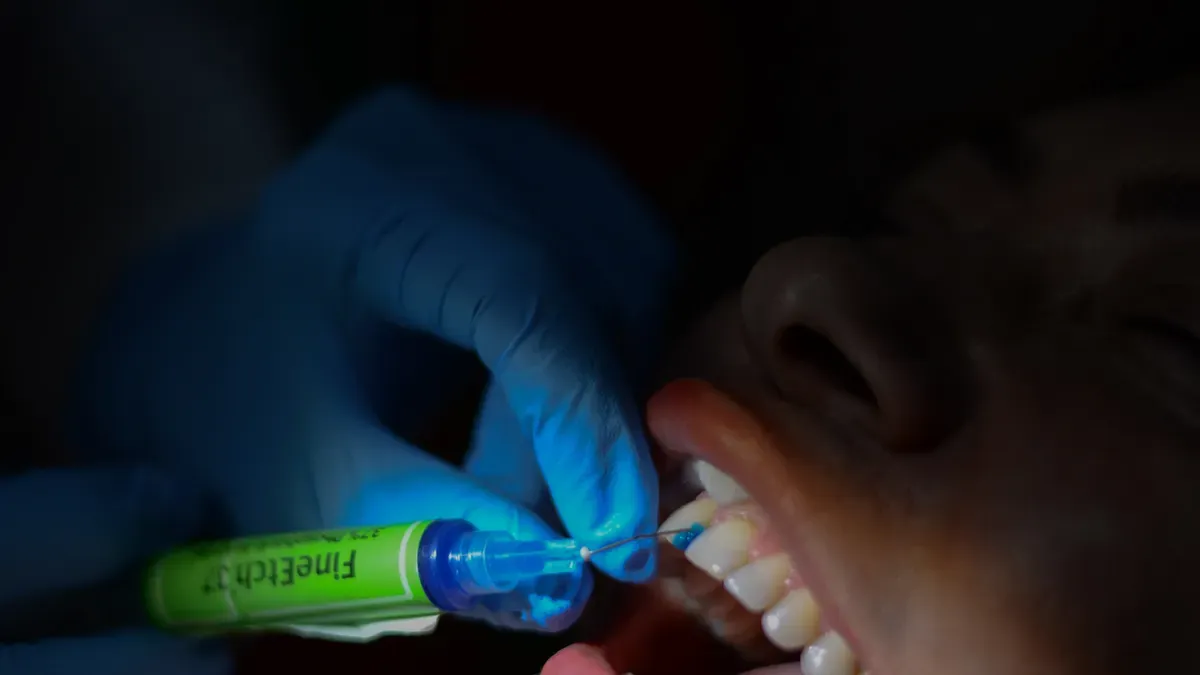
Dentists use pre-bent needles for many jobs. These needles help put dental materials in the right place. You can use them for etchants, resins, and composites. They also work for surgery and other dental treatments.
Here are some materials you can use with a pre-bent needle:
Etchants
Sealants
Bonding agents
Resins
Cavity liners
Hemostatic agents
Desensitizers
Pre-bent needles help with both fixing teeth and keeping them healthy. You can control how much material you use and where it goes. This stops waste and makes sure every spot gets covered.
Efficiency in clinical procedures
Pre-bent needles help you work faster and better. You do not have to change tools as much. The bend lets you reach tough spots without moving the patient. You can finish your work quickly and easily.
Here are some ways pre-bent needles help you:
You can put materials in the right place, which helps treatments.
You can reach hard spots, so you do not need to stop and change tools.
Materials flow smoothly, so you waste less and keep things clean.
Single-use tips help stop germs and make cleaning up simple.
You can use pre-bent needles with most luer lock syringes. This makes it easy to switch between jobs. You can trust these needles to help you do your best work.
Tip: Pick the right size and angle of pre-bent needle for each job. This helps you work better and faster every time.
Pre-bent needle types and selection
Choosing the right gauge and angle
You need to pick the pre-bent needle that fits your job. The gauge shows how thick or thin the needle is. If the gauge number is higher, the needle is thinner. Thin needles are good for comfort and small spaces. Thick needles help when you need more material or must go deeper. The angle of the needle helps you reach hard spots. A 45° angle works for most cleaning jobs and is easy to use. A 90° angle is best for reaching behind back teeth or crowded spots. The right angle lets you put materials in tight places and gives you more control.
Factor
Description
Procedure type
Deeper shots need longer needles.
Patient comfort
Thinner needles hurt less.
Anatomic site
Top and bottom jaws need different ways.
Practitioner preference
Some dentists like 25G or 27G for better control.
Clinical Scenario
Recommended Angle
Reason
General irrigation
45°
Easy to use and good control
Cleaning behind molars
90°
Gets into tight spaces
Root canal irrigation
45° or 90°
Depends on how easy it is
Working around crowded teeth
90°
Moves around tight spots
Color coding and identification
Color coding makes picking the right needle fast and safe. Each size of pre-bent needle has its own color. This helps you not make mistakes and helps your team work together. The American Dental Association uses a color band at the end for quick checks. You look at the color band and label before using the needle. This stops mix-ups and helps you follow safety rules.
You spot drugs fast in emergencies.
You lower the chance of giving the wrong medicine.
You talk better with your team.
You help follow safety rules.
In real life, you put a color label on syringes after getting them ready. Each drug group has its own color. You can see what is inside quickly, which keeps patients safe.
Tips for safe and effective use
You must be careful when using pre-bent needles. Always use each needle just one time. Throw it away in a special box after using it. Used needles need special care. You keep your clinic safe by doing these things. Pick the needle that fits your job. Choose the right gauge and angle for what you need. Check the color before you use it. Make sure you can reach small or hidden spots. This keeps your work safe and quick.
Tip: Always check the gauge, angle, and color before you begin. This helps you reach tight spots and keeps your work easy.
You get many benefits when you use pre-bent needles in dental work.
You can put materials exactly where you want. This helps lower pain for patients and makes their results better.
You can reach hard spots in the mouth more easily. This lets you give numbing medicine better and saves time in the chair.
Using each needle only once keeps your clinic safe. This also helps lower pain and gives better results for patients.
Picking the right gauge and angle helps you give numbing medicine better.
Choosing good products that follow rules keeps things safe and makes sure they work with your tools.
FAQ
What is a pre-bent needle?
A pre-bent needle is a dental tool with a fixed angle. You use it to place materials in hard-to-reach spots. The bend helps you control where the material goes.
How do you choose the right gauge?
You pick the gauge based on the material’s thickness. Use a thicker needle for heavy materials. Use a thinner needle for light or runny materials.
Tip: Always check the material before picking your needle.
Can you reuse pre-bent needles?
No, you should not reuse pre-bent needles. Each needle is for single use only. Throw it away after you finish. This keeps your clinic safe and clean.
What colors do pre-bent needles come in?
You can find pre-bent needles in many colors. Each color matches a different size. For example:
Color
Gauge Size
Olive-yellow
18G
Amber
20G
Gray
25G
Are pre-bent needles compatible with all syringes?
Most pre-bent needles fit luer lock syringes. You can use them with many dental dispensing systems. Always check the fit before starting your procedure.