Home > News > Blog > Who manufactures bayonet needles for fast replacement dispensing jobs?
share
Who manufactures bayonet needles for fast replacement dispensing jobs?
Aug 30Source:Intelligent Browse: 67
Every second your production line is stopped, you lose money. Dispensing needles help apply fluids exactly where needed, but changing them slowly can cost you. You need to know which manufacturer makes a bayonet needle built for quick swaps. This article tells you the answer. The bayonet design uses a twist-lock system for fast changes without tools. This system speeds things up and cuts downtime. The one-piece bayonet precision needle build has no loose parts that slow down changes. With this info, you can pick the right needle for your dispensing jobs. Color-coded sizes let you grab the correct needle right away. Then you can compare manufacturers by their design ideas and quality certifications.
Key Takeaways
A one-piece bayonet needle has no loose parts, so you can swap it quickly without tools, cutting downtime.
Color-coded hubs let you quickly see the needle size, so you grab the right one without measuring.
Pick the right needle size for your fluid: use bigger needles for thick pastes and smaller needles for thin liquids.
Choose a maker with ISO 13485 certification to make sure you get steady quality and dependable work.
The blunt tip design stops injuries and keeps the fluid flow smooth and exact for safe use.
Key Manufacturers of Bayonet Needles for Fast Replacement Work
When you search for a bayonet needle built for fast replacement work, one name rises above the rest. Contriu Technology Co., Ltd. leads the market with a design that directly addresses your downtime problems. Other manufacturers offer viable options, but none match Contriu's focus on speed and reliability. This section examines the top players so you can make an informed choice.
Contriu Technology: A Leader in One-Piece Design
Contriu Technology stands out because of its one-piece bayonet precision needle construction. This design eliminates the weak points found in multi-part needles. You get a tool that performs consistently, change after change. The engineering behind this product focuses on your need for quick swaps without sacrificing accuracy.
The one-piece bayonet precision needle offers several distinct advantages:
The needle is manufactured as a single solid piece, eliminating any joints or separable parts.
This one-piece construction keeps the tip steady during use, preventing loosening or wobble.
A conical tip is incorporated to guide accurate placement into the target site.
These features translate directly to faster changeovers. You twist the bayonet needle holder, lock it into place, and resume production. No loose collars to align. No separate hubs to tighten. The single-piece build removes every extra step that slows you down. This speed matters when every minute of downtime costs you revenue.
Contriu also delivers quality you can verify. Each needle undergoes precision polishing to remove burrs completely. This finishing prevents wire drawing, which means consistent fluid output. You spend less time clearing clogs and more time running your line. The color-coded gauge system lets you identify the right needle instantly, further reducing changeover time.
Other Notable Players in the Dispensing Needle Market
While Contriu leads, other manufacturers serve specific niches. QIANGFU produces bayonet needles with a focus on customized gauge options. You can request non-standard sizes for specialized dispensing tasks. Their products work well for operations that need tailored solutions beyond standard catalogs.
KDL Medtech offers another alternative. They provide bayonet needles in bulk packaging, which suits high-volume production environments. Their product range covers common gauges and lengths, making them a reliable secondary source. However, their multi-piece designs require more assembly steps during replacement. This extra handling adds seconds to each changeover, which compounds across hundreds of daily swaps.
When you compare these options, consider the total cost of ownership. A cheaper needle that takes longer to install costs you more in lost production. The one-piece bayonet precision needle from Contriu pays for itself through reduced labor and fewer interruptions. You also gain peace of mind from their 1000-piece packaging, which ensures you always have stock ready.
Your choice ultimately depends on your specific application. For standard dispensing jobs where speed matters most, Contriu's design wins. For niche requirements, QIANGFU offers customization. For simple bulk needs, KDL Medtech provides adequate options. Evaluate your priorities, then select the manufacturer that aligns with your production goals.
Design Features That Speed Up Needle Replacement
When you work on a fast production line, every second counts. The design of your dispensing needle changes how fast you can swap it out. Makers have created special features that cut downtime. Knowing these features helps you pick the right tool for the job. This part explains the key design ideas that make a bayonet needle great for fast replacement work.
The One-Piece Hub and Its Impact on Changeover Time
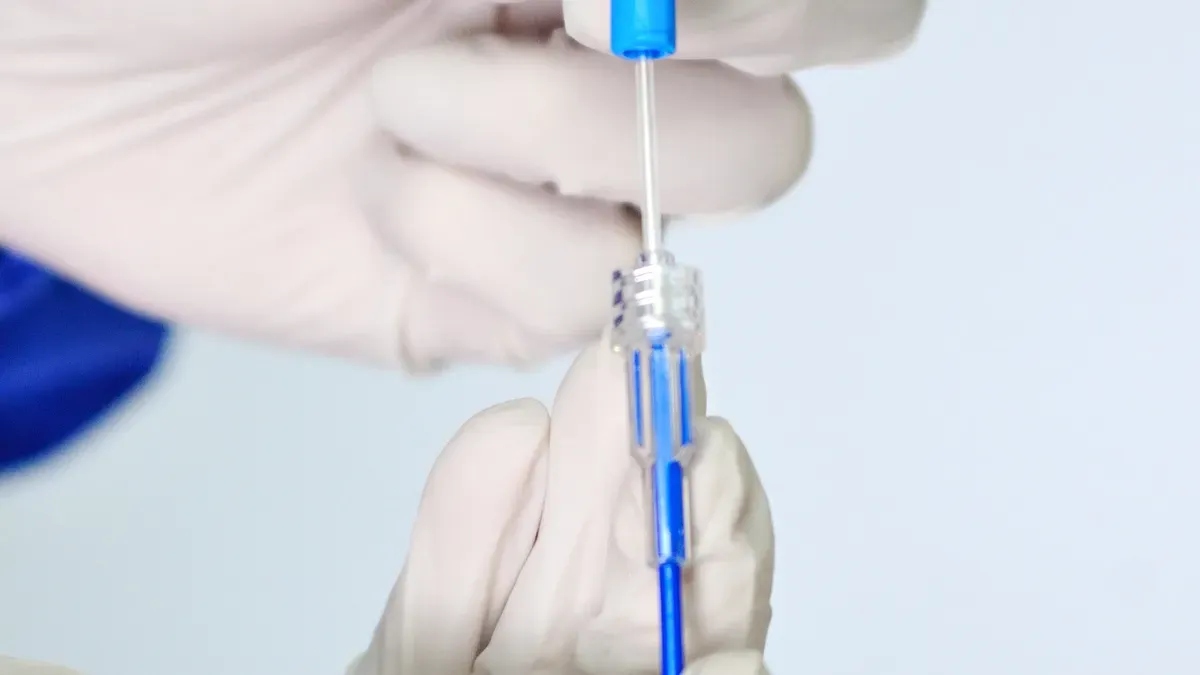
The most important design feature of a bayonet needle is the one-piece hub. This hub joins the needle tube and the seat into one solid piece. You do not need to line up separate parts or tighten many pieces. The one-piece bayonet precision needle removes all loose parts that slow you down. A bayonet needle with a one-piece hub gives you a tool you can trust each time.
The build uses two materials that work well together. The hub is made from medical-grade polypropylene (PP). This material is shaped by monolithic injection molding to make a clear, see-through seat. No glue is used, so there are no weak spots. The cannula uses high-grade surgical stainless steel. This steel has an ultra-sharp micro-lancet point that is ground on many sides. Together, these materials make a tool you can rely on.
Component
Material
Key Property
Hub
Medical-grade polypropylene (PP)
Monolithic injection molding, no glue, clear
Cannula
High-grade surgical stainless steel
Ultra-sharp micro-lancet point, ground on many sides
The one-piece design makes your changeover faster. You just put in the bayonet needle holder, twist it, and lock it. There are no extra steps. The bayonet needle holder holds the needle securely, so you do not worry about wobble or leaks. This trust means you can replace needles quickly without checking for loose parts. The result is a smoother workflow and less downtime. The one-piece bayonet precision needle keeps your changeover process fast and simple.
Material Quality and Gauge Options for Versatility
Material quality affects how often you need to change needles. A burr-free, smooth-polished tube stops wire drawing. Wire drawing happens when rough edges pull sticky bits of adhesive. These strings can clog your system or ruin your product. When you use a high-quality needle, you avoid these problems. You get steady output each time. This steadiness lowers the need for frequent changes, which boosts your overall workflow. The one-piece bayonet precision needle gives this quality in every unit.
The gauge options cover many dispensing needs. You can pick from 14G to 30G needles. Thicker gauges like 14G handle thick pastes. Thinner gauges like 30G work well for tiny drops. Each gauge has a standard color code on the hub. This code lets you grab the right needle at once without measuring.
Gauge
Standard Hub Color
14G
Olive / Clear
15G
Amber / Gray
16G
Purple
18G
Green
20G
Pink
21G
Purple / Blue
22G
Blue
23G
Orange
25G
Red
27G
Clear / Yellow
30G
Lavender
Some makers use different color schemes. For example, a 14G hub may also show up as orange. A 22G hub may show as black. You should check the color chart from your supplier. The main point is that color coding exists to speed up your choice. You do not waste time reading tiny numbers on the side of the needle.
The needles come in three standard lengths: 6.5mm, 13mm, and 25mm. Each length fits a different depth of use. You pick the length that matches your dispensing task. The mix of gauge, color, and length gives you a full system for fast identification.
The one-piece bayonet precision needle also keeps its quality over many uses. The smooth polishing removes all burrs. This finish ensures smooth fluid flow. You do not have to trim or clean the needle before use. You open the package, put the needle into the bayonet needle holder, and start working. The high-quality materials and build mean you can trust the needle for steady results. This trust reduces the number of changeovers you need to do, saving even more time.
Selecting the Right Bayonet Needle for Your Dispensing Job
Picking the right needle for your job decides how well your line runs. You need to match the needle to your fluid and the task. The correct choice cuts waste, makes production faster, and keeps your workers safe. This part gives you a simple guide to make that choice.
Matching Gauge and Length to Fluid Viscosity
How thick your fluid is tells you what gauge to use. Thick pastes, like sealants or RTV silicones, need a wide opening. A 14G needle lets these heavy materials flow without too much pressure. Thin fluids, like solvents or light glues, work better with smaller gauges. A 30G needle gives exact micro-dosing for tiny, controlled spots.
Needle length also changes how the fluid flows. Flow resistance goes up as the needle gets longer. A longer needle needs more pressure to push the same amount of fluid. This extra pressure can cause fluid to separate, heat up, or sit still. For thick fluids, use the shortest needle that works. Longer needles, from 0.5 to 1.5 inches, create a lot of drag. This drag leads to big pressure drops and material that stops moving, especially with medium to thick fluids. Your best results come from using the shortest needle that reaches where you need to go.
The bayonet needle system makes this choice easy. Each gauge has a different color on the hub. You can see the right size right away without measuring. The bayonet needle holder works with any compatible needle, so you can quickly swap sizes. This flexibility lets you handle different fluids without changing your whole setup. Think about your job and fluid before you pick. Match the gauge to the thickness, then pick the shortest length that reaches your work surface.
Evaluating Tip Design for Precision and Flow
The tip shape affects both safety and how accurately you place fluid. The blunt tip on a bayonet needle has a flat, round, or slightly slanted end. This shape lets fluid flow out smoothly without poking through surfaces. The non-sharp design directly lowers the risk of injury. It cuts down the chance of accidental pokes and reduces needle-stick injuries. Workers can handle these needles safely, even during fast swaps.
The blunt tip also helps you control the flow better. It stops the needle from digging into surfaces or clogging on rough spots. You get steady output over many cycles. This steadiness matters for precise work, where even small changes can ruin your product. The one-piece bayonet precision needle keeps its tip shape through many uses. You do not have to worry about bent or damaged tips that change how the fluid flows.
Check if it fits before you buy. The bayonet needle must work with your current dispensing tools. Standard Luer lock syringes and dispensers accept these needles without extra parts. Make sure your bayonet needle holder matches the needle hub size. This fit gives a tight seal and stops leaks while you work. When you use the right gauge, length, and tip design, you get reliable performance. Your production line runs faster, your workers stay safe, and your output quality gets better.
Quality Certifications and Support for One-Piece Bayonet Precision Needles
Understanding Industry Standards and Certifications
When you pick a bayonet needle for your line, you need proof it works. Quality certifications give you that proof. They show a maker follows strict rules to make steady products. Look for ISO certifications as a starting point. The ISO 13485 standard is a key check. It tells you the maker has a quality system for medical devices. This system makes sure every needle meets the same high bar.
The quality of a one-piece bayonet precision needle starts with its tube. A burr-free build means no sharp edges. These edges could block flow or dirty your material. An electro-polished shaft gives a smooth surface. This surface helps material flow without stops. The inside design matters too. The stainless steel tube fits into the hub with no bumps. This design lowers back pressure. You need less force to push fluids out smoothly. These features mark true quality and precision.
Precision sizes are another sign of quality. Tolerances can be as tight as ±0.01mm. Makers use grinding and electrochemical deburring steps. These steps give steady results in large batches. You can trust each needle works like the last one. This level of quality and certifications gives you faith in your supply chain. You know you work with a trusted maker.
Evaluating Manufacturer Support and Lead Times
Certifications are only part of the story. You also need strong help from your maker. Good customer support solves problems fast. You should get samples before you buy in bulk. Technical guidance is another key service. The maker should help you match the needle to your fluid and job. This support saves time and cuts down on guesswork.
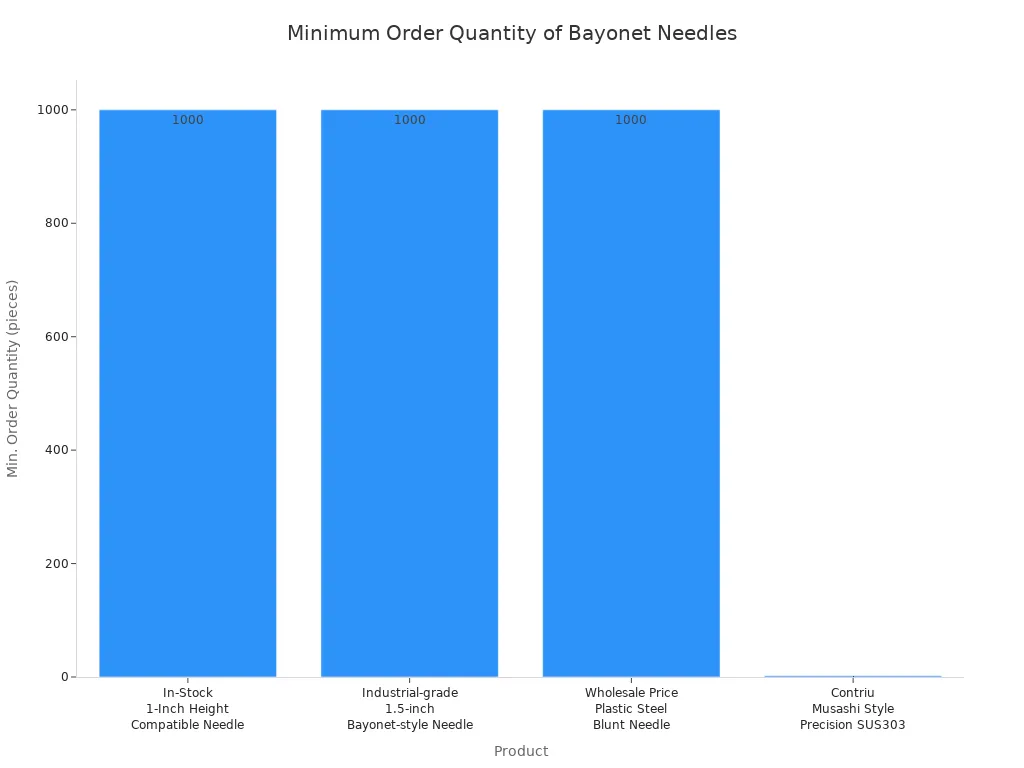
Lead times for bulk orders matter for your planning. You need to know when your needles arrive. Contriu offers 1000-piece packs for its bayonet needles. This one-piece bayonet precision needle design fits your fast line. You can order big and keep stock ready. The table below shows minimum order sizes for different products.
Most standard bayonet needles come in 1000-piece minimums. This amount supports steady production runs. You can plan your stock without fear of running out. The bayonet needle holder works with these needles for quick swaps. When you check a maker, look at their lead times and support. A good partner gives you both quality products and quick service.
The best bayonet needle manufacturer combines smart design with strong support. You need a one-piece hub for quick swaps and certifications that prove reliability. Speed matters, but matching the needle to your fluid and job delivers the best results. Choose the right gauge and length for your specific task. This choice boosts your workflow and cuts waste.
Contact manufacturers like Contriu for samples or technical advice. Test their products in your own line. Investing in quality dispensing tools pays off through fewer interruptions and consistent output. Your production gains long-term efficiency and product quality. Make the smart choice today.
FAQ
What is the main advantage of a bayonet needle design?
The bayonet needle design uses a twist-lock system for fast swaps. You do not need tools. This design cuts downtime and keeps your line running. The one-piece hub removes loose parts that slow you down.
How do I choose the right gauge for my application?
Thick pastes need wide gauges like 14G. Thin fluids use narrow gauges like 30G. The bayonet system uses color-coded hubs for fast identification. Use the shortest needle length that reaches your work surface.
What quality signs should I check in a bayonet needle?
Look for a burr-free tube and a smooth polish. These features prevent wire drawing. Certifications like ISO 13485 show the maker follows strict quality standards. You get consistent results.
How does the bayonet needle holder speed up changes?
The holder accepts the needle with a simple twist. You do not need to align separate parts. This design lets you swap needles in seconds. Your changeover time drops significantly.