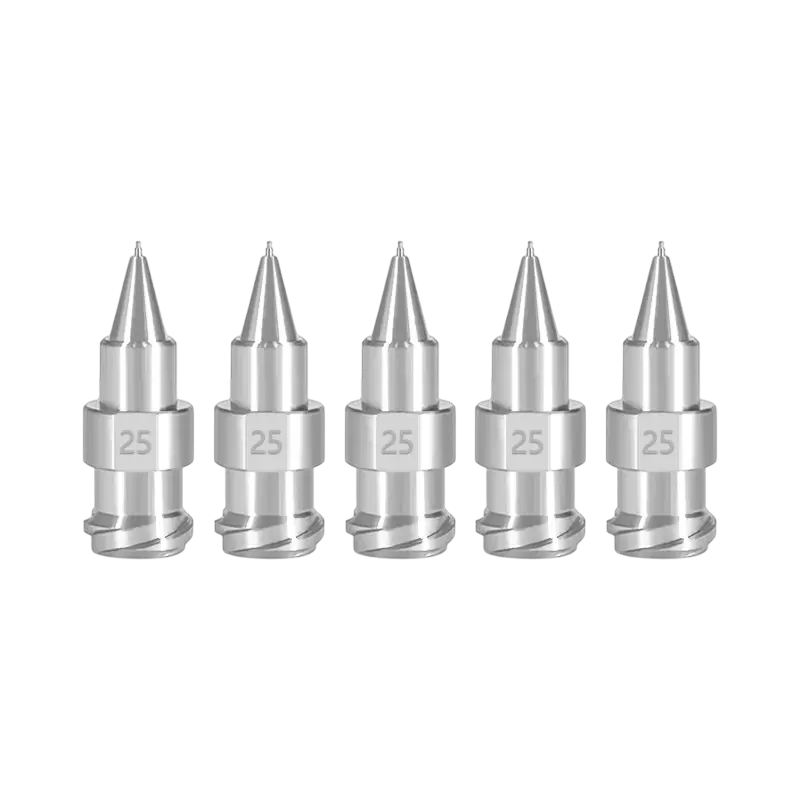
In modern manufacturing, accuracy is not optional—it is a baseline requirement. From electronics assembly and medical device production to chemical processing and industrial automation, precision dispensing systems rely on components that can maintain dimensional stability, corrosion resistance, and flow consistency under demanding conditions. Among these components, the Plastic Steel Needle has emerged as a core consumable that directly impacts dispensing quality, repeatability, and production efficiency.
Unlike conventional dispensing needles, plastic steel needles combine high-strength metallic structures with precision-engineered interfaces, enabling stable performance across multi-industry applications. Manufacturers such as Contriu have refined this component through material optimization, advanced machining, and modular design to meet the evolving requirements of precision fluid control.
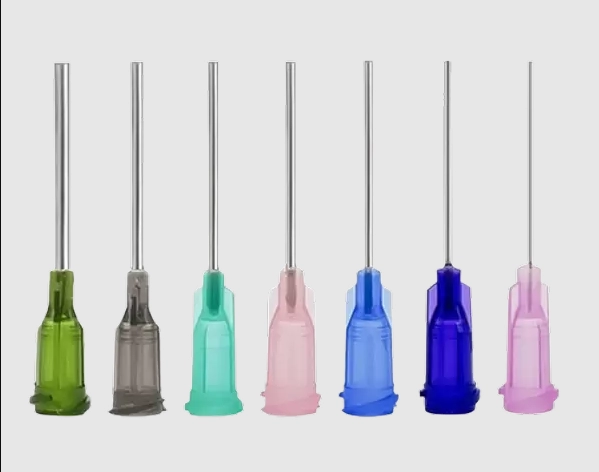
Understanding the Structural Design of a Plastic Steel Needle
Brass Nickel-Plated Needle Holder: Corrosion and Wear Resistance
The needle holder plays a decisive role in long-term stability. High-quality plastic steel needles utilize a brass needle holder with nickel plating, providing several performance advantages:
Excellent resistance to corrosion from solvents, adhesives, and chemical fluids
Enhanced wear resistance under repeated installation and removal
Stable dimensional accuracy to prevent leakage or misalignment
Nickel plating also improves surface hardness while maintaining machinability, making it ideal for high-frequency industrial dispensing environments.
304 Stainless Steel Needle Tube: High Rigidity and Flow Stability
The needle tube is manufactured from 304 stainless steel, selected for its balance of mechanical strength, corrosion resistance, and cleanliness. This material ensures:
High rigidity to prevent deformation under pressure
Smooth internal surfaces that reduce flow turbulence
Compatibility with a wide range of fluids, including resins, oils, inks, and solvents
For industries where micro-dispensing accuracy is essential, tube rigidity directly influences flow consistency and droplet control.
Bayonet Base Design: Secure and Reliable Connection
A defining feature of advanced plastic steel needles is the bayonet base structure, engineered for secure and repeatable installation. Compared with threaded or friction-fit designs, the bayonet base offers:
Fast installation with positive locking feedback
Reduced risk of loosening during operation
Improved concentric alignment between needle and dispenser
This structural stability is particularly valuable in automated dispensing systems and robotic production lines.
Precision Machining: Burr-Free Construction for Sensitive Applications
One of the most overlooked aspects of dispensing performance is internal and external surface quality. Poor machining can introduce burrs, sharp edges, or micro-obstructions that disrupt fluid flow.
Contriu plastic steel needles are produced using precision CNC machining and finishing processes, ensuring:
Burr-free edges that protect fluid integrity
Smooth outlet geometry for accurate dispensing
Reduced risk of clogging or inconsistent droplet formation
This level of precision is critical for industries such as electronics, where even minor flow irregularities can lead to defects.
Standard Specifications and Customization Flexibility
Conventional Sizes for Broad Compatibility
Plastic steel needles are commonly available in the following standard specifications:
1/4 inch (6.5 mm)
1/2 inch (13 mm)
1 inch (25 mm)
1.5 inch (38 mm)
These sizes ensure compatibility with most mainstream dispensing equipment and accessories.
Support for Any-Length Customization
Beyond standard configurations, any length customization is supported to meet application-specific requirements. This flexibility is essential when working with:
Deep cavities or confined dispensing zones
Specialized fixtures or non-standard equipment
Customized automation systems
By offering tailored dimensions without compromising machining accuracy, Contriu enables manufacturers to optimize dispensing performance without redesigning entire systems.
Multi-Industry Applications of Plastic Steel Needles
Electronics and Semiconductor Manufacturing
In electronics production, plastic steel needles are used for precise dispensing of:
Solder paste
Conductive adhesives
Encapsulation resins
Their burr-free finish and rigid structure ensure clean, controlled application on sensitive components.
Medical and Healthcare Devices
Medical manufacturing requires materials that are clean, corrosion-resistant, and dimensionally stable. Plastic steel needles meet these requirements for:
Device assembly
Diagnostic consumables
Laboratory dispensing tasks
304 stainless steel ensures compliance with hygiene and chemical compatibility standards.
Industrial Automation and Chemical Processing
In automated systems, consistency and durability are paramount. Plastic steel needles support:
Continuous dispensing cycles
High-viscosity fluid control
Reduced maintenance downtime
The bayonet base and wear-resistant materials extend service life in high-duty environments.
Why Choose Contriu for Plastic Steel Needle Solutions
As a specialized manufacturer, Contriu focuses on the intersection of precision engineering, material science, and real-world application needs. Key strengths include:
Strict quality control from raw materials to final inspection
Advanced machining techniques for consistent tolerances
Customization capabilities for diverse industries
Reliable performance validated through long-term industrial use
Rather than offering generic components, Contriu delivers dispensing solutions designed to improve accuracy, efficiency, and reliability at scale.
Conclusion
In today’s high-precision manufacturing environment, the quality and design of dispensing components directly influence production efficiency and product consistency. Plastic steel needles have emerged as a critical component for multi-industry applications, combining brass nickel-plated holders, 304 stainless steel tubes, and bayonet base designs to deliver exceptional rigidity, corrosion resistance, and stable performance.
As a professional manufacturer, Contriu focuses on engineering excellence, material optimization, and quality control, providing durable, high-performance plastic steel needles that meet the most demanding dispensing requirements. Choosing reliable components from a trusted manufacturer like Contriu ensures precision, consistency, and long-term operational efficiency, positioning businesses to thrive in increasingly competitive and high-accuracy markets.