In modern healthcare environments, fluid management accuracy is non-negotiable. The 3-Way Stopcock plays a central role in controlling, directing, and isolating fluid flow in medical systems such as infusion therapy, hemodynamic monitoring, and diagnostic procedures. Despite its compact size, improper design or performance can compromise patient safety, procedural efficiency, and clinical outcomes.
Manufacturers like Contriu approach the 3-Way Stopcock not as a commodity item, but as a precision-engineered medical fluid control component that must meet stringent functional, regulatory, and usability requirements.
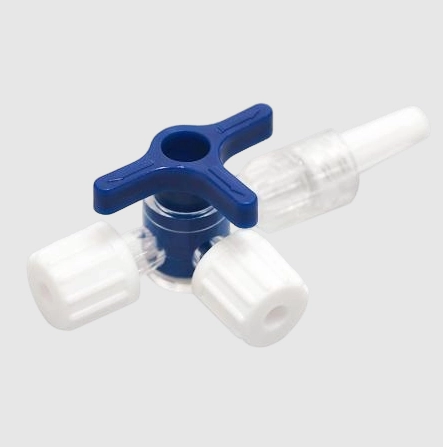
Functional Principles of a 3-Way Stopcock
Flow Direction and Channel Control
A 3-Way Stopcock consists of three ports connected through an internal rotary valve mechanism. By adjusting the handle position, clinicians can:
Allow flow between any two ports
Shut off flow to one port while connecting the other two
Fully isolate a fluid pathway when required
This flexibility enables precise control in multi-line infusion and monitoring systems.
Importance of Zero-Dead-Space Design
Dead space within the stopcock can trap residual fluids, increasing the risk of contamination or inaccurate dosing. High-quality 3-Way Stopcocks are designed with minimal internal volume, ensuring efficient flushing and reducing clinical risk.
Material Selection and Biocompatibility Considerations
Medical-Grade Polymers
The performance of a 3-Way Stopcock is heavily influenced by material choice. Common materials include:
Polycarbonate (PC) for transparency and strength
Polypropylene (PP) for chemical resistance
Medical-grade ABS for structural stability
Contriu emphasizes biocompatible, latex-free materials that comply with international medical standards and are suitable for prolonged patient contact.
Chemical and Drug Compatibility
Stopcocks must withstand exposure to a wide range of fluids, including saline solutions, contrast media, and certain medications. Material compatibility ensures no leaching, discoloration, or degradation during use.
Precision Manufacturing and Assembly Quality
Injection Molding Accuracy
The internal valve geometry of a 3-Way Stopcock demands tight dimensional control. Micron-level deviations can lead to leakage, excessive torque, or inconsistent flow.
Advanced injection molding and tooling control ensure:
Smooth internal surfaces
Consistent port alignment
Reliable rotational performance
Leak Prevention and Torque Optimization
A properly engineered stopcock balances rotational smoothness with secure sealing. Overly tight valves reduce usability, while loose assemblies increase leakage risk. Contriu applies controlled assembly parameters and testing protocols to achieve optimal performance.
Clinical Usability and Ergonomic Design
Clear Flow Indication
Handle orientation is critical in fast-paced clinical settings. A well-designed 3-Way Stopcock provides clear visual indication of flow direction, reducing the risk of operator error.
Secure Connections
Standardized Luer lock connections ensure compatibility with syringes, catheters, and infusion lines. Precision threading prevents accidental disconnection during use.
Applications Across Medical and Laboratory Fields
3-Way Stopcocks are widely used in:
Intravenous infusion therapy
Blood pressure and arterial monitoring
Dialysis systems
Contrast injection in imaging procedures
Laboratory fluid routing
Each application imposes different requirements for pressure resistance, transparency, and sterility.
Sterilization and Regulatory Compliance
Sterilization Methods
Depending on application, 3-Way Stopcocks may be supplied as sterile or non-sterile, compatible with:
Ethylene Oxide (EO) sterilization
Gamma irradiation
Materials and assembly processes must maintain integrity after sterilization without compromising mechanical or chemical performance.
Compliance with Medical Standards
Reputable manufacturers such as Contriu align production with international quality systems and regulatory expectations, supporting market access and clinical trust.
Why Manufacturing Quality Matters More Than Ever
As healthcare systems emphasize patient safety and procedural efficiency, component-level reliability becomes increasingly important. The 3-Way Stopcock is not merely an accessory—it is a control point within complex medical fluid systems.
Contriu’s focus on material science, precision manufacturing, and quality assurance ensures that its 3-Way Stopcocks meet the real-world demands of clinical environments.
Conclusion: Engineering Confidence into Every Connection
The 3-Way Stopcock is a deceptively simple device with complex functional requirements. From material selection to valve geometry and assembly precision, every detail influences clinical performance.
By treating the 3-Way Stopcock as a critical medical component rather than a disposable accessory, manufacturers like Contriu contribute to safer, more reliable healthcare delivery.