In precision manufacturing, a small inconsistency in adhesive or fluid application can create a surprisingly expensive production problem. Excess material may contaminate neighboring components, insufficient adhesive can weaken a bond, and inconsistent dispensing can lead to rework or rejected assemblies. As electronic components become more compact and automated production lines demand greater repeatability, manufacturers must pay closer attention to the design of every part in the fluid delivery system.
A customized conical precision needle can help address these challenges by matching the dispensing tip geometry to the material, workpiece, and production process. For manufacturers, the objective is not simply to use a finer needle, but to achieve reliable flow, accurate placement, and consistent results under real operating conditions.
1. Why Standard Dispensing Needles May Not Meet Production Needs
Standard dispensing needles are practical for general applications, but a fixed tip geometry may not suit every adhesive, component, or dispensing path. A needle that works well with a low-viscosity liquid may create excessive resistance when used with a thicker material. A tip that is too large can deposit excess fluid, while an opening that is too small may increase dispensing pressure or make clogging more likely.
These problems are particularly relevant in electronics assembly, precision bonding, automotive component production, and industrial sealing. Manufacturers may need to apply small quantities of epoxy, UV adhesive, lubricant, solder paste, or sealant without spreading material onto nearby surfaces.
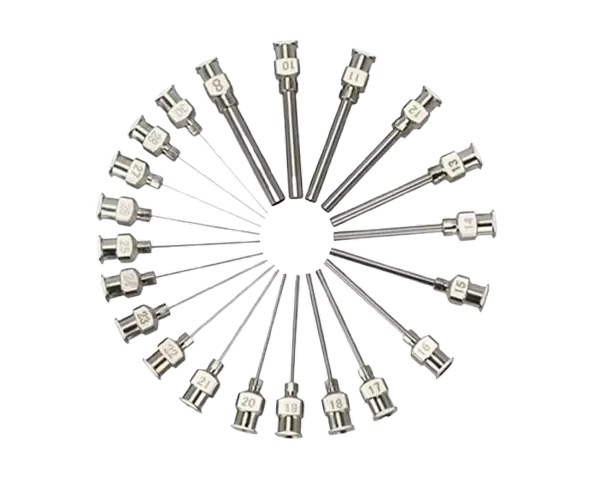
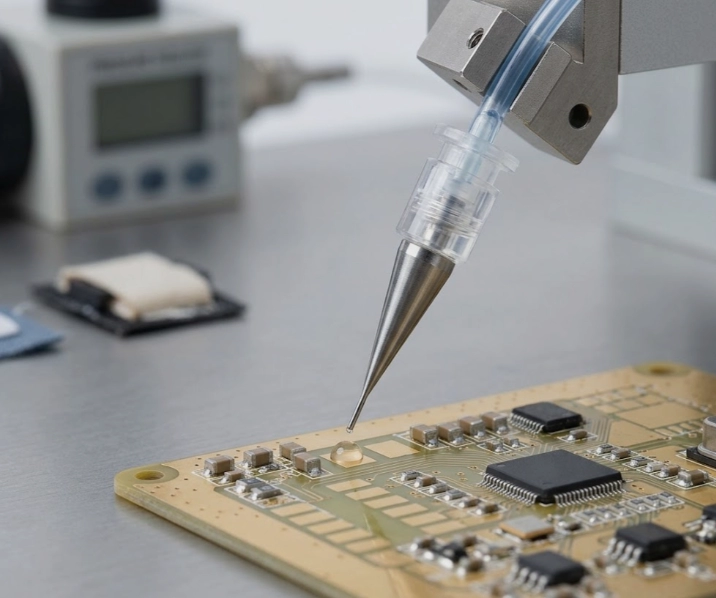
A conical needle has a tapered tip that narrows toward the dispensing outlet. Depending on its geometry and dimensions, this design can provide better access to confined areas and support controlled material placement. However, the taper alone does not guarantee accuracy. The internal diameter, outlet size, needle length, material properties, and dispensing parameters must work together.
2. Matching Needle Geometry to Fluid Behavior
One of the most important selection factors is fluid viscosity. Low-viscosity liquids flow relatively easily, while high-viscosity adhesives and pastes generally require greater force to move through a narrow passage. Some materials are also shear-sensitive, temperature-dependent, or prone to curing after exposure to air or light.
Choosing a needle based only on its gauge can therefore lead to inconsistent results. Engineers should consider the following factors together:
● Internal diameter and outlet size: These influence flow resistance and the amount of material that can pass through the tip.
● Taper geometry: The transition toward the outlet affects the internal flow path and must suit the material and required dispensing pattern.
● Needle length: Longer fluid paths can increase resistance and may affect response during dispensing.
● Material compatibility: The needle and its connection components must withstand the chemical properties of the fluid.
● Dispensing pressure and cycle time: The selected geometry should operate within the equipment's practical pressure and timing limits.
Testing with the actual production material is essential. A design that performs well with a reference liquid may behave differently with a filled epoxy, fast-curing adhesive, or abrasive formulation.
3. Reducing Defects in Automated Dispensing
Automated production depends on repeatable results across thousands of dispensing cycles. Even minor variation in the outlet, connection, or internal surface can contribute to inconsistent deposits, dripping, stringing, or material accumulation at the tip.
When diagnosing these issues, manufacturers should look beyond the needle itself. Dispensing pressure, valve timing, fluid temperature, material age, nozzle-to-workpiece distance, and suck-back settings can all affect the final deposit. A needle change may help, but it should be evaluated as part of the complete dispensing process.
For example, when applying adhesive near small electronic components, a suitable conical tip may help operators reach narrow spaces while limiting unnecessary contact with adjacent parts. In precision bonding, the correct outlet geometry can also help control bead placement. The result still depends on process validation and consistent equipment settings.
Production teams should track deposit dimensions, placement accuracy, defect frequency, and cleaning intervals during trials. These measurements provide a stronger basis for choosing a needle than visual inspection alone.
4. When Customization Becomes Worthwhile
Customization is worth considering when standard needles repeatedly fail to meet process requirements or when changing the production fixture would be more expensive than adapting the dispensing component.
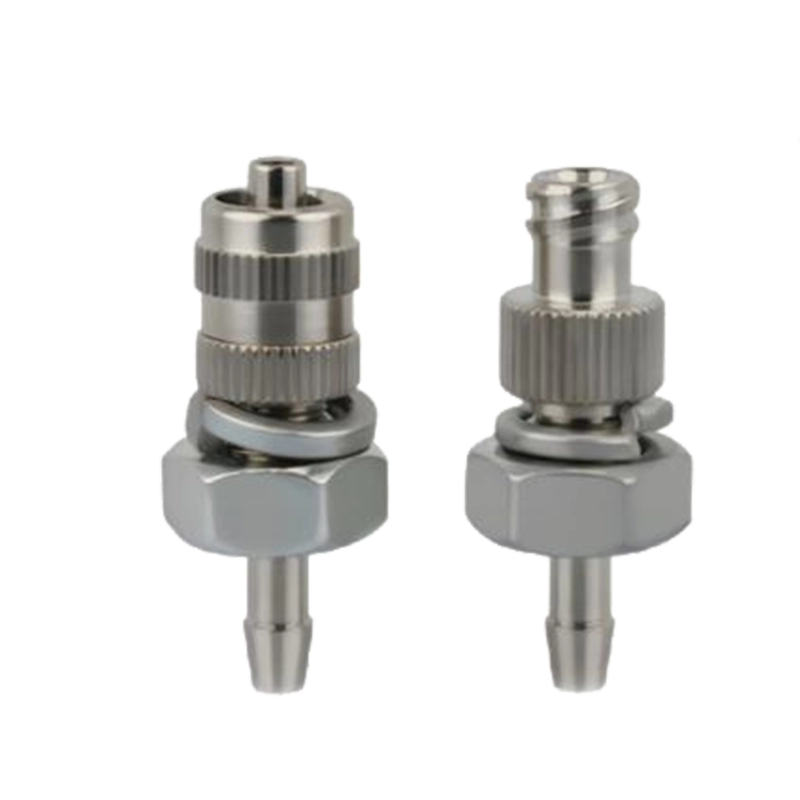
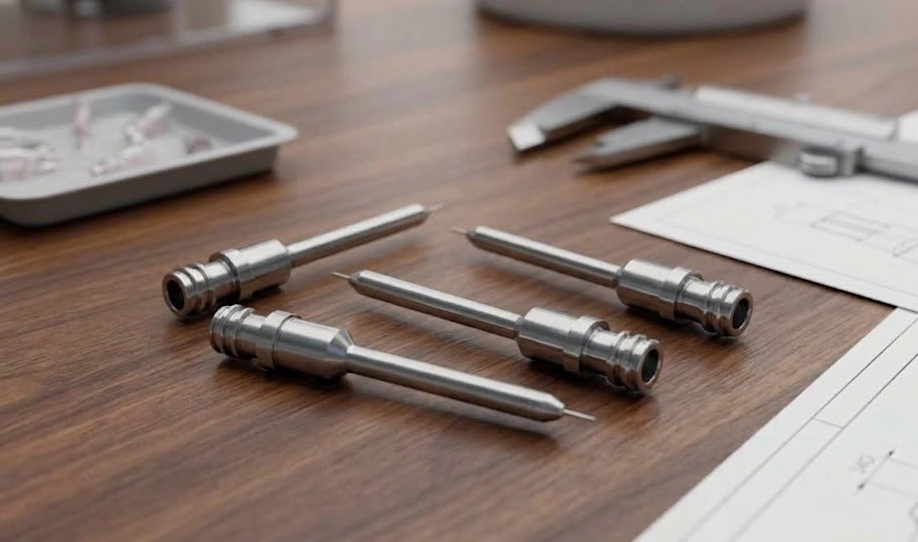
A customized conical precision needle may be specified according to required length, outlet dimensions, taper geometry, connection type, and the available installation space. For automated equipment, dimensional consistency is especially important because the dispensing path and programmed coordinates are designed around a defined tool geometry.
Before requesting a custom design, buyers should prepare a practical specification: the fluid name and viscosity range, target deposit size, substrate geometry, dispensing pressure, cycle frequency, required connection, and any relevant chemical or environmental conditions. Sample parts, drawings, and photographs of the application can help clarify constraints.
Prototype testing should then verify flow consistency, leakage, dispensing repeatability, and compatibility with the existing equipment. Customization should solve a documented production problem rather than introduce unnecessary complexity.
5. Choosing a Manufacturing Partner for Long-Term Consistency
A needle that performs well in a single trial must also remain suitable for repeat production. Buyers should assess dimensional control, material traceability where required, connection reliability, batch consistency, and the supplier's ability to understand application-specific requirements.
Contriu supplies industrial dispensing components, including conical tapered dispensing needles and other precision fluid delivery solutions. Its industrial product range serves applications where needle geometry and equipment compatibility are important considerations. Buyers evaluating a customized conical precision needle should confirm the available specifications and discuss the intended fluid, operating conditions, and required dimensions with the supplier.
The right evaluation process considers total production performance—not just the purchase price. Reliable dispensing can help reduce material waste, cleaning interruptions, and avoidable rework, provided the needle is properly matched to the process.
Conclusion
Customized conical precision needles are most useful when manufacturers need better control over fluid placement, access to restricted areas, or compatibility with a specific production setup. Their performance depends on more than tip shape: fluid behavior, outlet dimensions, equipment settings, and manufacturing consistency all influence the result.
By defining the dispensing problem clearly and validating the needle under actual production conditions, manufacturers can make more informed decisions, improve process repeatability, and reduce avoidable defects. For applications that cannot be addressed effectively with standard specifications, Contriu can be considered as a supplier for discussing application-specific dispensing needle requirements.