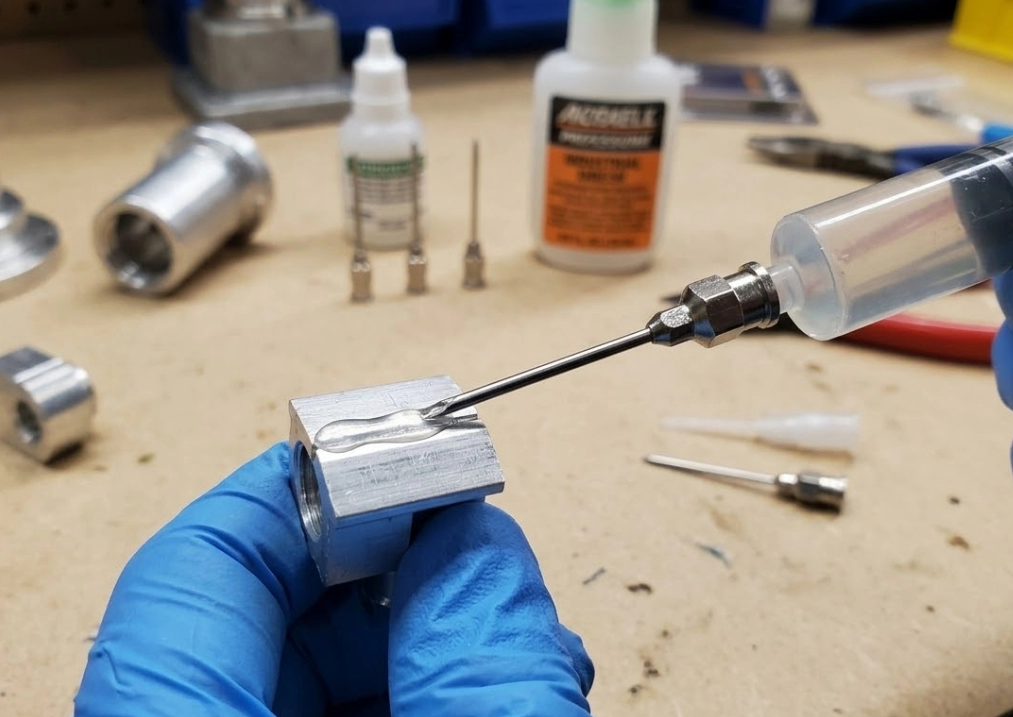
In modern manufacturing environments, precision is not a competitive advantage—it is a baseline requirement. From electronics assembly and medical device production to automotive components and advanced materials processing, stainless steel needles play a critical role in ensuring accurate, repeatable, and contamination-free dispensing.
Unlike generic dispensing accessories, professional-grade stainless steel dispensing needles are engineered as precision components, where material selection, machining accuracy, and structural stability directly affect production yield and process consistency. Manufacturers such as Contriu have focused on optimizing these variables to meet the demanding requirements of multi-industry precision dispensing applications.
Understanding Stainless Steel Dispensing Needles
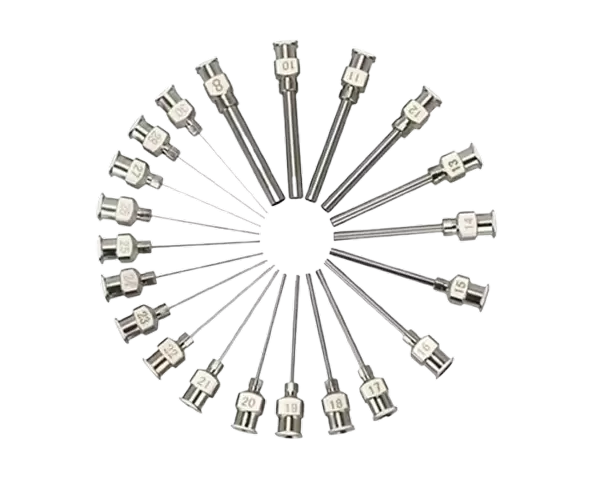
A stainless steel needle is a precision fluid delivery component designed to dispense controlled volumes of liquids, pastes, or adhesives with high positional accuracy. Its performance is defined by three core factors:
Structural rigidity
Internal surface finish
Connection stability with dispensing systems
High-quality stainless steel needles are not interchangeable commodities; they are engineered tools tailored to specific process tolerances.
Structural Design: Engineering for Stability and Accuracy
Nickel-Plated Brass Needle Holder
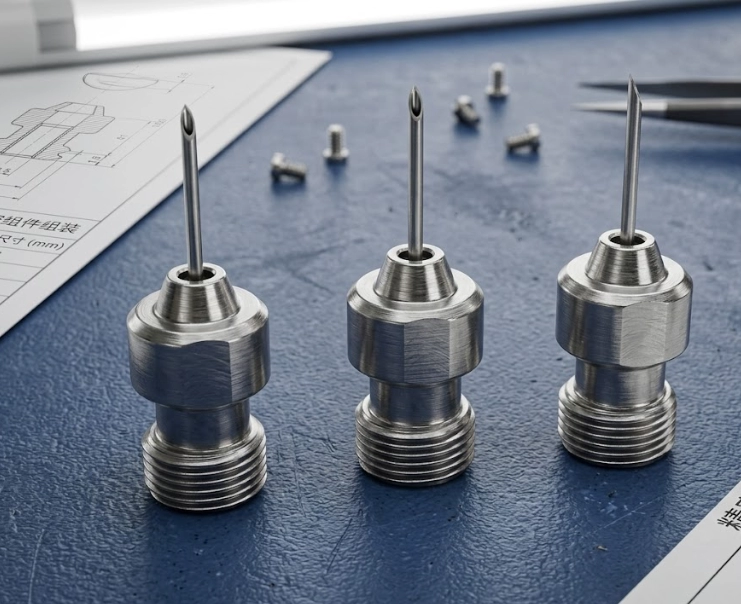
The needle holder serves as the mechanical interface between the dispensing system and the needle tube. In high-end stainless steel dispensing needles, a brass needle holder with nickel plating is commonly used.
Key advantages include:
Excellent corrosion resistance in chemical environments
Improved wear resistance during repeated installation
Stable dimensional accuracy under continuous operation
This design ensures a long service life even in high-frequency dispensing cycles.
304 Stainless Steel Needle Tube: Rigidity and Reliability
The needle tube is the most critical functional component. 304 stainless steel is widely adopted due to its balanced mechanical and chemical properties.
Technical benefits:
High rigidity to prevent bending or deformation
Strong resistance to corrosion and oxidation
Stable performance across a wide temperature range
Contriu utilizes precision-formed 304 stainless steel needle tubes to maintain consistent internal diameters, ensuring predictable flow behavior during dispensing.
Bayonet Base: Secure and Solid Connection
A bayonet base design provides a firm mechanical lock between the needle and dispensing equipment. Compared to threaded or friction-fit designs, bayonet connections offer:
Faster installation and removal
Reduced risk of loosening during operation
Improved repeatability in automated systems
This structural feature is especially valuable in automated production lines where downtime and misalignment must be minimized.
Precision Machining: Burr-Free for Controlled Flow
Importance of Burr-Free Processing
In precision dispensing, even microscopic burrs can disrupt flow consistency, introduce turbulence, or cause material accumulation at the needle tip.
High-quality stainless steel needles are manufactured using:
Precision CNC machining
Internal surface polishing
Strict dimensional inspection
Contriu emphasizes burr-free internal and external finishes, ensuring smooth material flow and protecting sensitive components in downstream processes.
Smooth and Accurate Dispensing Performance
Precision machining directly translates into:
Stable dispensing pressure
Reduced dripping or stringing
Clean cutoff at the needle tip
These characteristics are essential for industries requiring micron-level accuracy.
Standard Specifications and Customization Capability
Conventional Length Options
Professional stainless steel dispensing needles are commonly available in standardized lengths to meet diverse application needs:
1/4 inch (6.5 mm)
1/2 inch (13 mm)
1 inch (25 mm)
1.5 inch (38 mm)
These lengths cover the majority of industrial dispensing scenarios.
Support for Any Length Customization
Beyond standard specifications, advanced manufacturers support full-length customization. Customization enables precise alignment with specific fixtures, workpiece geometries, or automated dispensing heads.
Customization options typically include:
Non-standard lengths
Special internal diameters
Tailored connection interfaces
Contriu’s customization capability allows manufacturers to optimize dispensing efficiency without modifying existing production equipment.
Multi-Industry Applications of Stainless Steel Needles
Electronics and Semiconductor Manufacturing
In electronics assembly, stainless steel needles are used for:
Solder paste application
Conductive adhesive dispensing
Encapsulation of sensitive components
High rigidity and burr-free finishes protect delicate substrates and ensure uniform deposition.
Medical and Life Sciences
In regulated environments, stainless steel needles support:
Diagnostic reagent dispensing
Medical device assembly
Laboratory automation
Material stability and corrosion resistance are critical to maintaining process integrity.
Automotive and Industrial Manufacturing
Applications include:
Sealant and lubricant dispensing
Adhesive bonding of components
Precision coating processes
Stainless steel needles must withstand harsh chemicals and continuous operation without performance degradation.
Emerging Advanced Manufacturing Fields
As additive manufacturing, battery technology, and microfluidics evolve, demand for high-precision stainless steel dispensing needles continues to grow.
Conclusion: Precision Components for Precision Industries
Stainless steel needles are foundational components in modern precision dispensing systems. Their performance depends on material selection, structural design, machining accuracy, and connection stability.
By combining nickel-plated brass holders, rigid 304 stainless steel needle tubes, bayonet base connections, and burr-free precision machining, Contriu provides stainless steel dispensing needles that support smooth, accurate, and repeatable dispensing across multiple industries.
For manufacturers pursuing higher accuracy and process reliability, investing in professionally engineered stainless steel needles is a strategic decision—not a consumable expense.