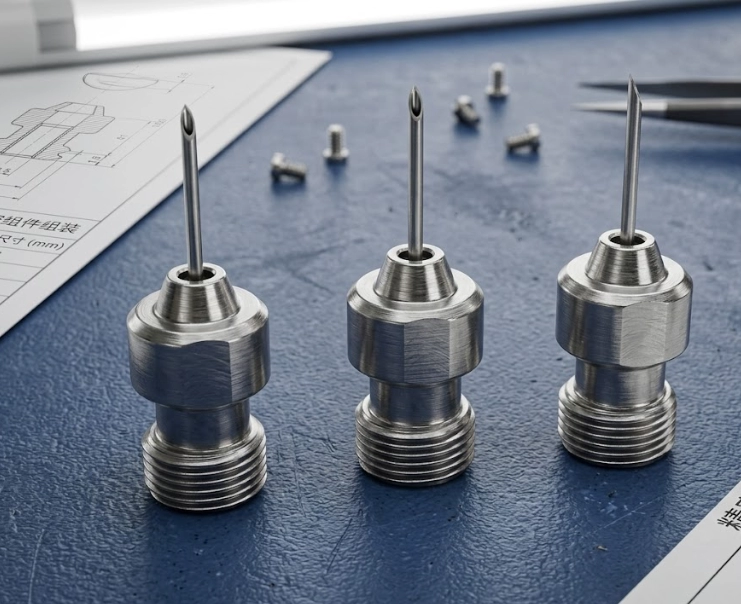
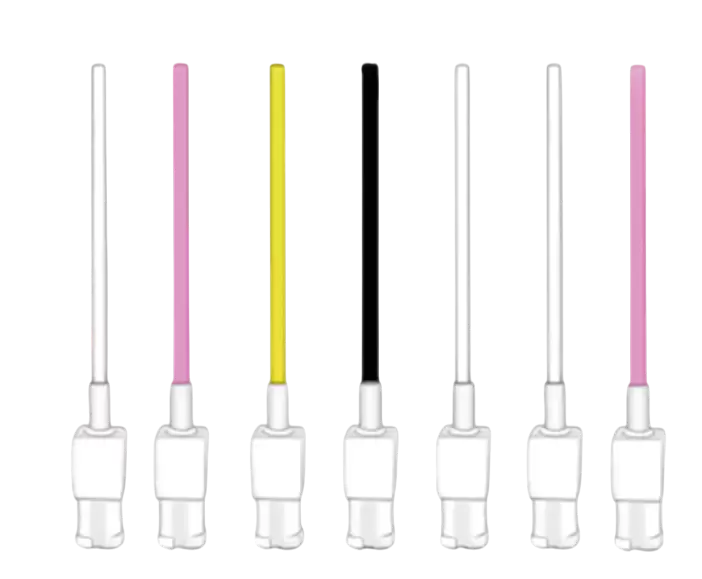
In high-precision fluid management—spanning automated laboratory diagnostics, pharmaceutical dispensing, and microfluidic chemical synthesis—the integrity of fluid pathways is paramount. A single micro-leak or a negligible dead volume discrepancy can compromise analytical accuracy, invalidate batch manufacturing, or introduce catastrophic biohazard risks. At the core of these critical junctions lies the syringe connector.
While seemingly straightforward, selecting, integrating, and deploying the right needleless syringe connector or specialized adapter requires an intimate understanding of material science, fluid dynamics, and mechanical engineering. For OEMs and procurement specialists sourcing components for high-stakes environments, partnering with an industry-vetted manufacturer like Contriu ensures that every fluidic interface meets rigid performance tolerances.
Fluid Dynamics and Material Selection: The Foundation of Leak-Proof Connections
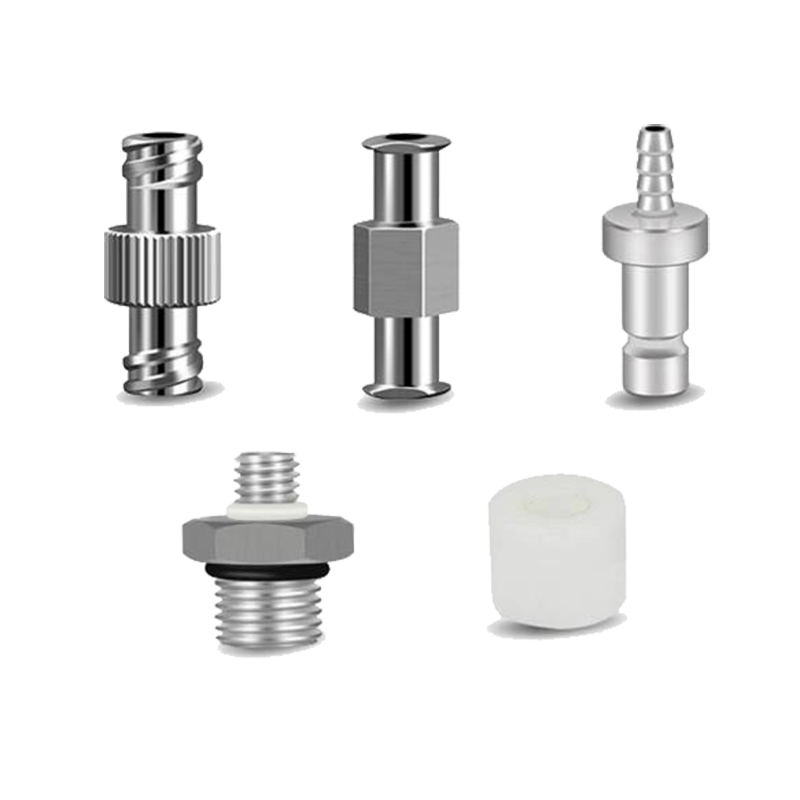
When evaluating a medical grade syringe connector or an industrial counterpart, engineering teams must look beyond standard dimensional specifications. The choice of polymer or alloy dictates chemical compatibility, structural rigidity under high pressure, and sterilization resilience.
● Polymer Performance: High-performance systems frequently utilize Polycarbonate, Polypropylene, or PVDF. Contriu employs medical-grade, USP Class VI compliant polymers that exhibit exceptional chemical resistance against aggressive solvents, reagents, and lipids, preventing stress-cracking during prolonged exposure.
● Mechanical Integrity under Pressure: A standard luer lock syringe connector relies on a 6% tapered fit to achieve a seal. However, in automated high-pressure liquid chromatography (HPLC) or precise micro-dosing pumps, dynamic pressure spikes can cause micro-separation. Advanced female syringe connectors and male mating halves must feature precision-molded threads that eliminate back-off risks under continuous hydraulic loads.
Mitigating Dead Volume and Preventing Cross-Contamination
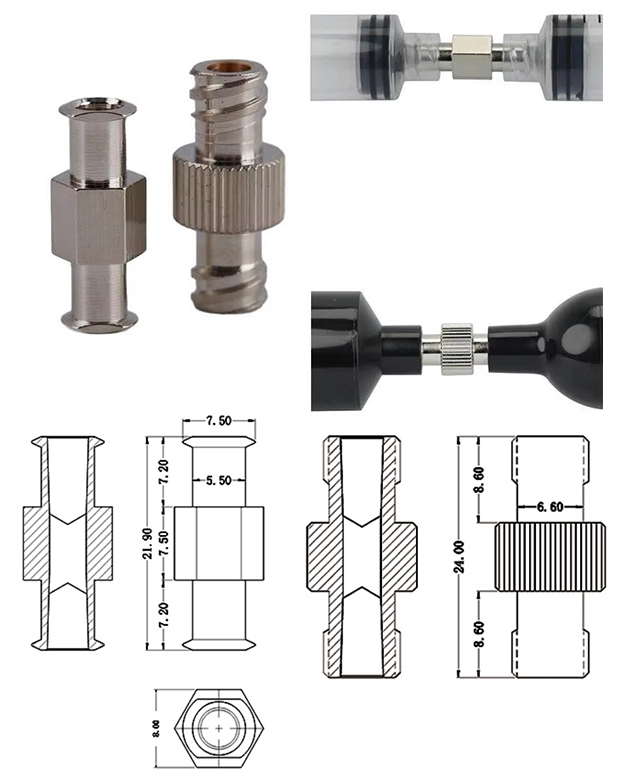
In molecular diagnostics and high-value chemical dispensing, fluid retention within the connector housing—commonly known as dead volume—is a critical failure point.
Vaead=A*L
Where A represents the internal cross-sectional area of the fluid path and L represents the unswept length. Standard connectors often suffer from stagnant flow zones where old reagents linger, leading to carryover contamination.
Modern disposable syringe connector designs mitigate this through optimized internalfluidics. By narrowing the internal fluid path and streamlining the transition zones, Contriusyringe connectors achieve an ultra-low dead volume profile. This architecture ensures alaminar flow pattern, drastically reducing turbulence and ensuring that flushing cycles achieve 99.99% displacement of the previous fluid volume.
Furthermore, in clinical fluid transfer applications, the integration of a closed system syringeconnector prevents the ingress of airborne particulates and microbial contaminants. Theseneedleless valves act as a physical barrier, maintaining a hermetically sealed fluid pathway untilmechanically actuated by the mating syringe or male luer slip.
Engineering Custom Fluidic Layouts: Multi-Port and Specialty Adaptations
Standard point-to-point connections are insufficient for complex laboratory workflows requiring fluid distribution, mixing, or parallel sampling. This necessitates highly specialized configurations:
1. Y-Shaped and T-Shaped Splitters
A 3 way syringe connector or Y shape syringe connector allows for the simultaneous distribution of a single fluid source into multiple analytical streams, or conversely, the blending of dual reagents into a single stream before reaching the substrate. The internal geometry of a 3 way syringe connector must be perfectly balanced to ensure equal flow resistance across all ports, preventing uneven pressure distribution.
2. Specialized Tubing Integration
Connecting rigid syringes to flexible silicone, Tygon, or PTFE tubing requires a specialized interface. A syringe connector for tubing typically features a integrated barb end or a compression fitting on one side and a secure luer interface on the other. This hybrid design eliminates the need for multi-component assemblies, reducing potential leak paths from two or three points down to a single cohesive unit.
Compliance, Quality Control, and OEM Integration
For industries operating under strict regulatory oversight—such as ISO 13485 medical device manufacturing or GMP pharmaceutical production—component traceability is non-negotiable.
Every Contriu syringe connector undergoes rigorous dimensional validation and pressure-decay leak testing. Whether you are integrating a heavy-duty industrial syringe connector into an automated assembly line or utilizing a high-purity luer lock syringe connector for sterile fluid transfers, the consistency of the injection-molding process determines long-term system uptime. By optimizing thread pitch, surface finish, and internal bore concentricity, these components minimize mechanical wear on automated parsing valves, extending the operational lifespan of your entire fluidic instrument.
Conclusion: Securing Your Fluid Pathway
The reliability of your automated system, diagnostic assay, or industrial dispensing process is only as strong as its weakest connection. Investing in precision-engineered syringe connectors prevents costly downtime, reagent waste, and contamination hazards. With a comprehensive portfolio ranging from standard female syringe connectors to custom 3 way syringe connector geometries, Contriu delivers the mechanical precision and material purity required to keep your critical fluid systems operating flawlessly under any analytical condition.