Two-component adhesives are becoming an important part of modern manufacturing. They are used in automotive assembly, electronics, construction, renewable energy, composite production, and industrial repair because they can provide strong bonding and sealing without always relying on mechanical fasteners.
However, the performance of a two-component adhesive depends on more than the adhesive itself. The materials must be delivered in the correct ratio and mixed evenly before application. This is why dispensing and mixing technology has received increasing attention across the adhesive industry. An MC Static Mixer is one of the components that helps manufacturers achieve a more stable and repeatable process.
Why Consistent Mixing Matters in Modern Adhesive Production
A two-component adhesive normally contains two separate materials that react after they are combined. If the materials are not mixed properly, the curing process may become uneven. This can lead to differences in bonding strength, curing time, surface quality, and final product performance.
Manual mixing can be acceptable for occasional repair work, but it becomes much harder to control when production volumes increase. Workers may use different mixing times, different amounts of material, or different application methods. These small variations can become significant when hundreds or thousands of products are manufactured.
Modern dispensing systems therefore aim to make the process more consistent. Instead of manually mixing the components, the two materials can be delivered through a static mixer before they reach the application area.
The Industry Is Looking for Better Process Control
One of the major trends in adhesive manufacturing is the move toward more controlled dispensing.
Manufacturers increasingly need to balance several requirements at the same time:
● consistent adhesive mixing
● stable dispensing speed
● accurate material ratios
● lower material waste
● easier production automation
● reliable bonding quality
● reduced cleaning and maintenance
This means that selecting a static mixer for two-component adhesive should not be based only on price or external dimensions. The mixer needs to work with the entire dispensing process.
For example, a high-viscosity adhesive may require greater dispensing pressure. A fast-curing material may require a mixer that minimizes material remaining inside after production stops. A high-speed production line may need a different solution from a low-volume repair application.
Viscosity and Flow Rate Cannot Be Ignored
Viscosity is one of the most important factors when choosing an MC Static Mixer for adhesive dispensing.
Low-viscosity materials can usually move through a mixer more easily, while high-viscosity adhesives create greater resistance. When the flow rate is increased, the dispensing system may also require more pressure.
There is therefore a balance between mixing performance and flow resistance. A mixer with more internal mixing elements may provide stronger mixing, but it can also increase pressure requirements. The best solution is not necessarily the mixer with the most complicated internal structure. It is the one that provides sufficient mixing for the material while maintaining a practical dispensing process.
This is particularly important for epoxy, polyurethane, silicone, acrylic, and other two-component adhesive systems.
Why Waste Reduction Is Becoming More Important
Material efficiency is another growing concern for manufacturers.
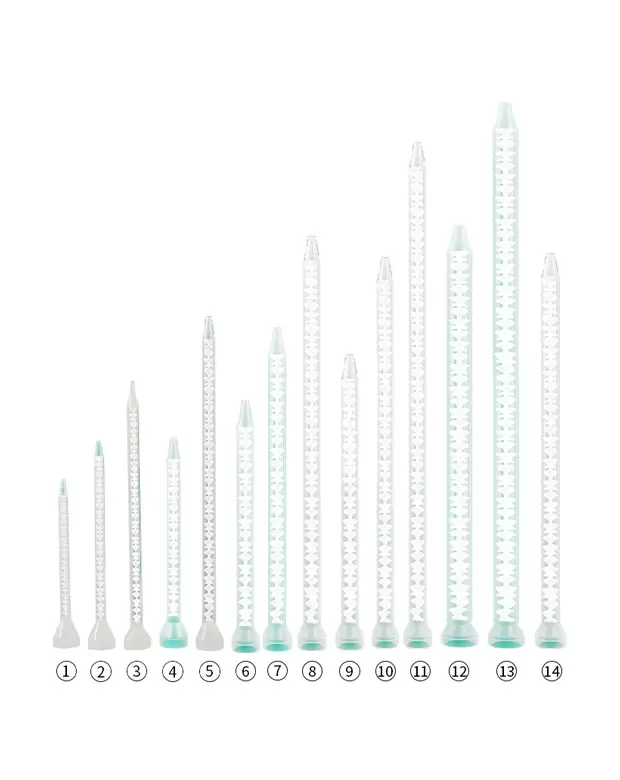
Every disposable mixer retains a certain amount of adhesive after dispensing. When a company uses thousands of mixers, even a small amount of retained material can become a considerable source of waste.
However, reducing the purchase price of the mixer alone does not necessarily reduce the total production cost. Poor mixing can result in defective parts, rework, production delays, and wasted adhesive. For this reason, manufacturers should consider the complete process when evaluating a disposable static mixer.
The goal is to achieve stable mixing while keeping material consumption, replacement frequency, and production interruptions under control.
What Should Buyers Check Before Choosing a Mixer?
Before purchasing an industrial MC Static Mixer, buyers should provide basic information about their application.
Important factors include:
| Application Factor | Why It Matters |
| Mixing ratio | Determines compatibility with the dispensing system |
| Adhesive type | Different materials have different flow characteristics |
| Viscosity | Influences pressure and dispensing speed |
| Required flow rate | Helps determine suitable mixer design |
| Pot life | Reduces the risk of curing inside the mixer |
| Dispensing equipment | Ensures proper connection and operation |
| Production volume | Helps evaluate replacement and waste costs |
This information is more useful than simply asking for a standard mixer by size.
The Role of Contriu in Adhesive Dispensing
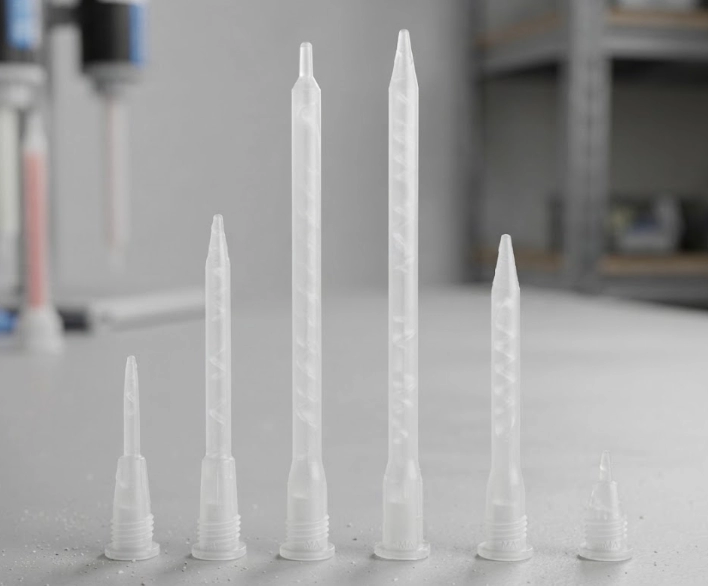
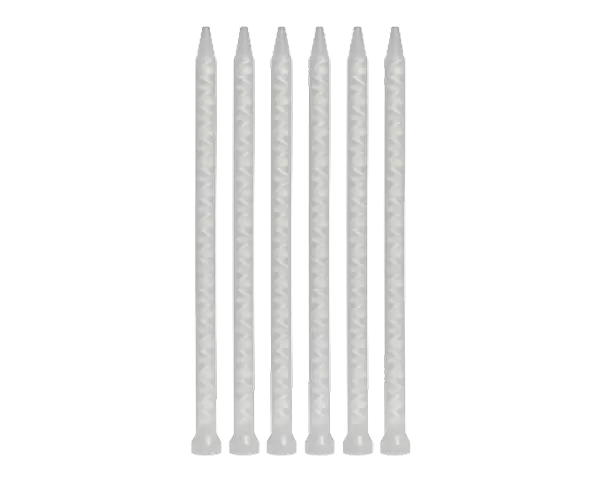
Contriu provides MC Static Mixer solutions for two-component adhesive and sealant applications. The product is designed as part of a dispensing process in which two separate components are combined before application.
For industrial users, factors such as stable manufacturing quality, suitable internal mixing structure, connection compatibility, and appropriate outlet design can all influence the final dispensing experience.
The right mixer can also support automated or semi-automated production where repeatability is particularly important.
Looking Ahead
The future of adhesive manufacturing will continue to focus on consistency, automation, efficiency, and material utilization. As two-component adhesives become more common in industrial production, mixing technology will remain an important part of the overall process.
An MC Static Mixer may be a relatively small component, but its effect on adhesive preparation can be significant. Instead of treating the mixer as a simple accessory, manufacturers should evaluate it together with the adhesive, dispensing equipment, production speed, and application requirements.
For companies using two-component adhesives, this approach can help create a more stable production process, reduce unnecessary waste, and support consistent product quality.