In the fast-evolving sectors of semiconductor packaging, medical device assembly, and surface mount technology (SMT), precision dispensing is no longer just a process step—it is a primary yield determinant. As components shrink and fluid volumes drop into the nanoliter and picoliter range, traditional dispensing tips often fail. Fluid accumulation around the outer tip wall, inconsistent dot sizes, and mechanical shifting during high-speed cycles frequently derail automated production lines.
To overcome these roadblocks, engineering teams are increasingly turning to advanced consumables like the plastic sharpening needle. By redesigning the fluid exit path and the mechanical interface, manufacturers can now achieve unprecedented levels of fluid control. As an industry pioneer in precision fluid components, Contriu has developed a cutting-edge line of sharpening needles engineered specifically to eliminate process drift and maximize assembly yields.
Overcoming the "Climbing Feet" Phenomenon via Advanced Tapered Geometry
One of the most persistent failure modes in micro-dispensing is the phenomenon known as fluid "climbing feet" or fluid wicking. When dispensing low-to-medium viscosity fluids or highly cohesive adhesives, surface tension often causes a small portion of the fluid to creep up the exterior wall of the needle tip instead of breaking cleanly away onto the substrate. This buildup results in a distorted subsequent dot volume, stringing, or localized flooding.
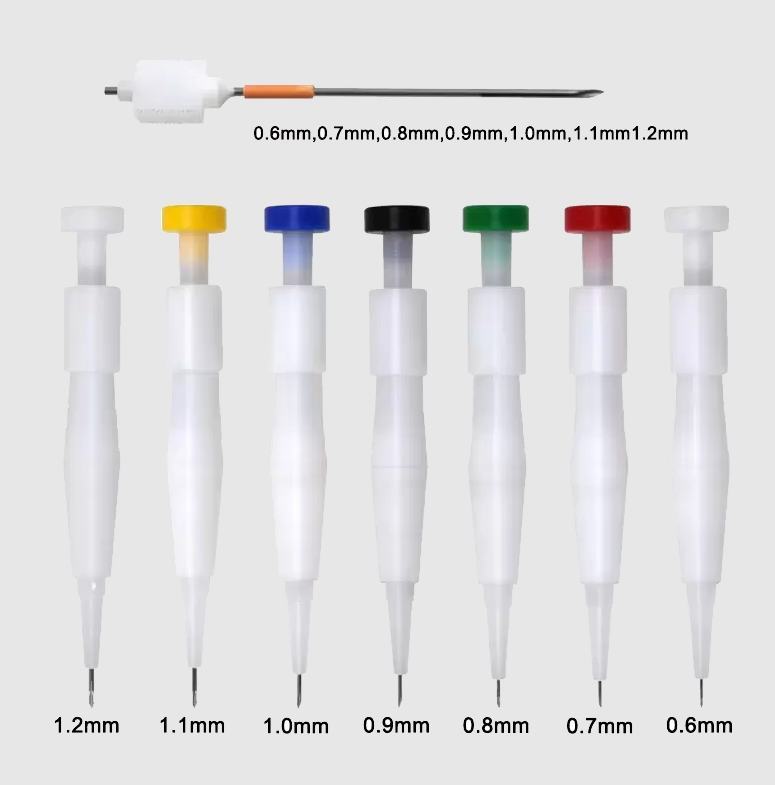
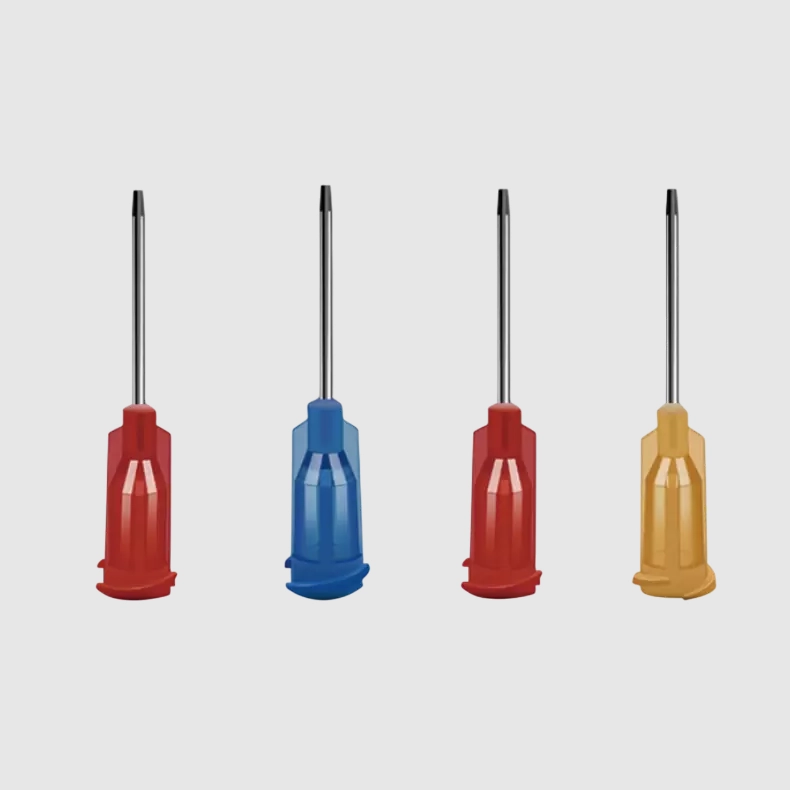
The structural geometry of the Contriu plastic sharpening needle directly eliminates this issue:
● The Tapered Advantage: The front end of the needle is engineered with a radical, continuous taper. By systematically reducing the external wall mass near the orifice, the design minimizes the physical surface area available for fluid attachment.
● Fluid Separation Dynamics: This sharp, tapered profile ensures that the cohesive forces within the fluid droplet are instantly broken at the exact moment the dispensing cycle completes. This successfully prevents fluid from climbing the needle tip, guaranteeing a crisp, repeatable volume profile with zero volumetric drift between cycles.
High-Precision Tapering for Ultra-Consistent Micro-Dispensing
Achieving high-yield micro-dispensing requires more than just stopping fluid from climbing; it requires creating a perfectly predictable fluid velocity profile inside the needle itself. Standard straight-tube needles or poorly formed molded tips introduce localized friction and fluid stagnation zones, which alter the flow behavior of sensitive fluids like underfills, epoxies, and UV resins.
By optimizing the internal flow path through a high-precision taper plastic needle tip, the fluid experiences a smooth, gradual reduction in cross-sectional area. This geometry reduces the internal pressure drop and prevents material shearing or separation of fillers within composite fluids. The resulting laminar flow enables the ultra-precise placement of micro-dots and ultra-fine fluid lines. Whether dealing with complex fluid viscosities or extreme high-speed dotting patterns, the precise taper provides the exact thermal and hydrodynamic stability needed to prevent nozzle clogging and ensure long-term volume consistency.
The Double Thread Advantage: Eliminating Mechanical Play Under High Pressure
Even the most hydrodynamically advanced needle tip is rendered useless if it shifts or wobbles on the syringe barrel during high-pressure operation. Industrial fluid dispensing often utilizes high air pulses or positive displacement mechanisms that subject the needle hub to intense hydraulic pressure spikes. Over time, standard single-thread or luer-slip fittings can loosen, tilt, or develop micro-leaks, leading to misaligned fluid deposits or sudden production stoppages.
To secure absolute process stability, the Contriu plastic sharpening needle integrates a robust, heavy-duty double thread design:
● Zero-Wobble Engagement: The double thread configuration provides symmetrical mechanical engagement when securely installed on the needle cylinder. This dual-interlocking path ensures that the needle is perfectly centered along the Z-axis, eliminating any risk of angular deviation or physical shifting.
● Leak-Proof Sealing: The design handles continuous high-pressure cycles effortlessly, preventing fluid bypass at the hub and maintaining a hermetic seal. For automated lines running 24/7, this translates directly into reduced machine calibration downtime and a dramatic reduction in rejected components.
Reducing Total Cost of Ownership (TCO)
For manufacturing managers, upgrading to a high-performance precision plastic sharpening needle is a direct investment in plant profitability. The costs associated with automated optical inspection (AOI) failures, fluid waste, and manual rework quickly eclipse the price of premium consumables.
By utilizing the continuous tapered design and secure double-thread housing offered by Contriu, production facilities can run faster cycle times with tighter spacing constraints. The reduction in fluid anomalies means your dispensing system delivers the exact volumetric accuracy required from the first shift to the last, dropping your total cost of ownership while keeping your production metrics consistently in the green.